
For most of the last two decades, the credit score that decided whether you got a mortgage — and at what price — came from scoring models built on a generation-old blueprint. That is finally changing. Lenders are moving toward FICO 10T and VantageScore 4.0, and the shift quietly rewrites what "good credit" means for a home loan.
If you plan to buy in the next two years, the mortgage credit score requirements you prepare for should be the new ones, not the old ones. The behaviors that optimize for a trended model are different — and you need months, not days, to build them.
Why This Matters Right Now
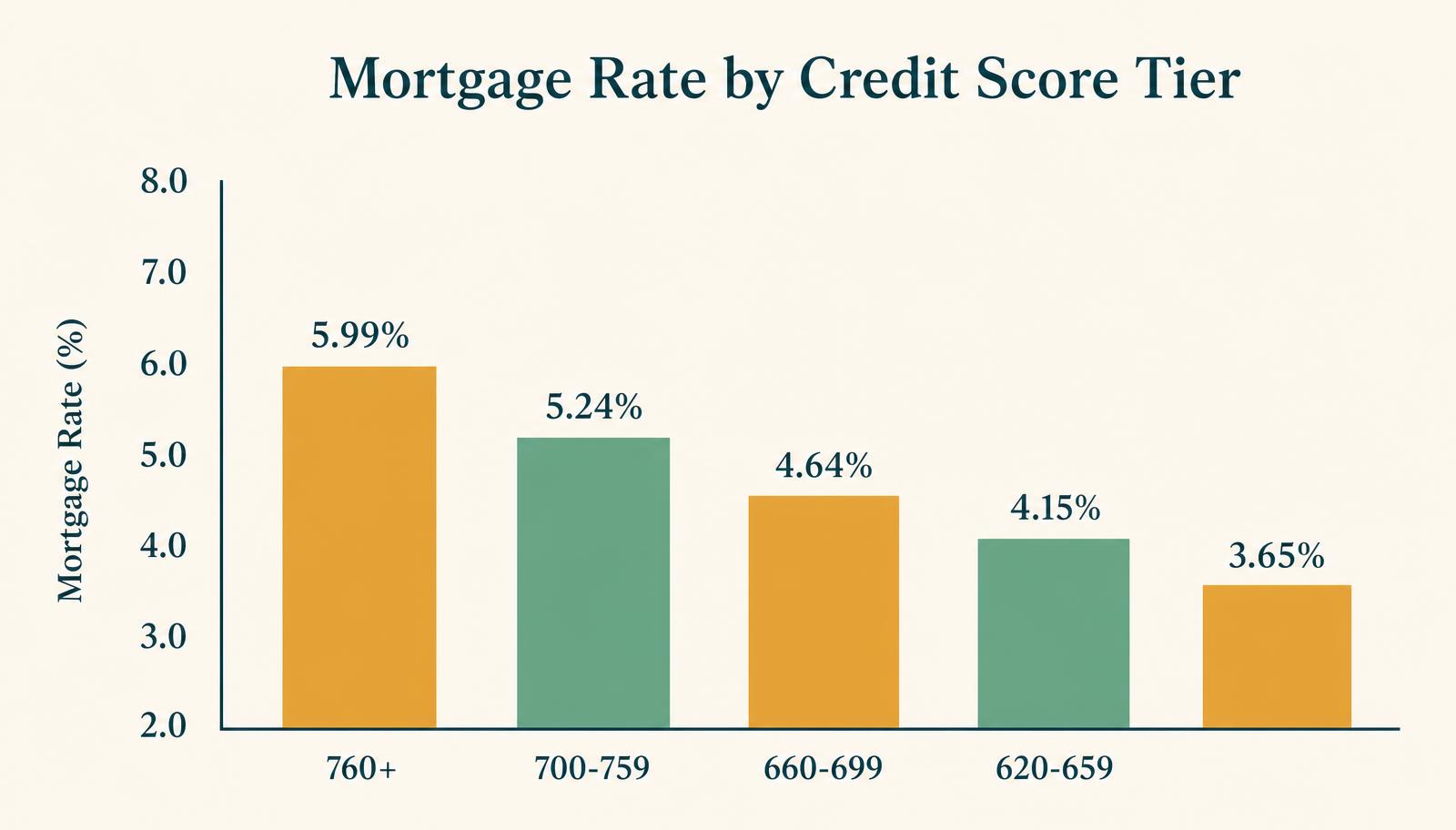
Housing affordability is already stretched. When rates are high, the credit score tier you land in is one of the few variables still under your control. The difference between a 680 and a 760 on a typical loan is often a full percentage point of interest, and on a 30-year mortgage that gap compounds into a five-figure sum.
Now add a model change. Under a trended model, two applicants with identical scores today can be priced differently tomorrow based on two years of behavior that neither of them was told mattered.
Background: The Score Behind the Mortgage
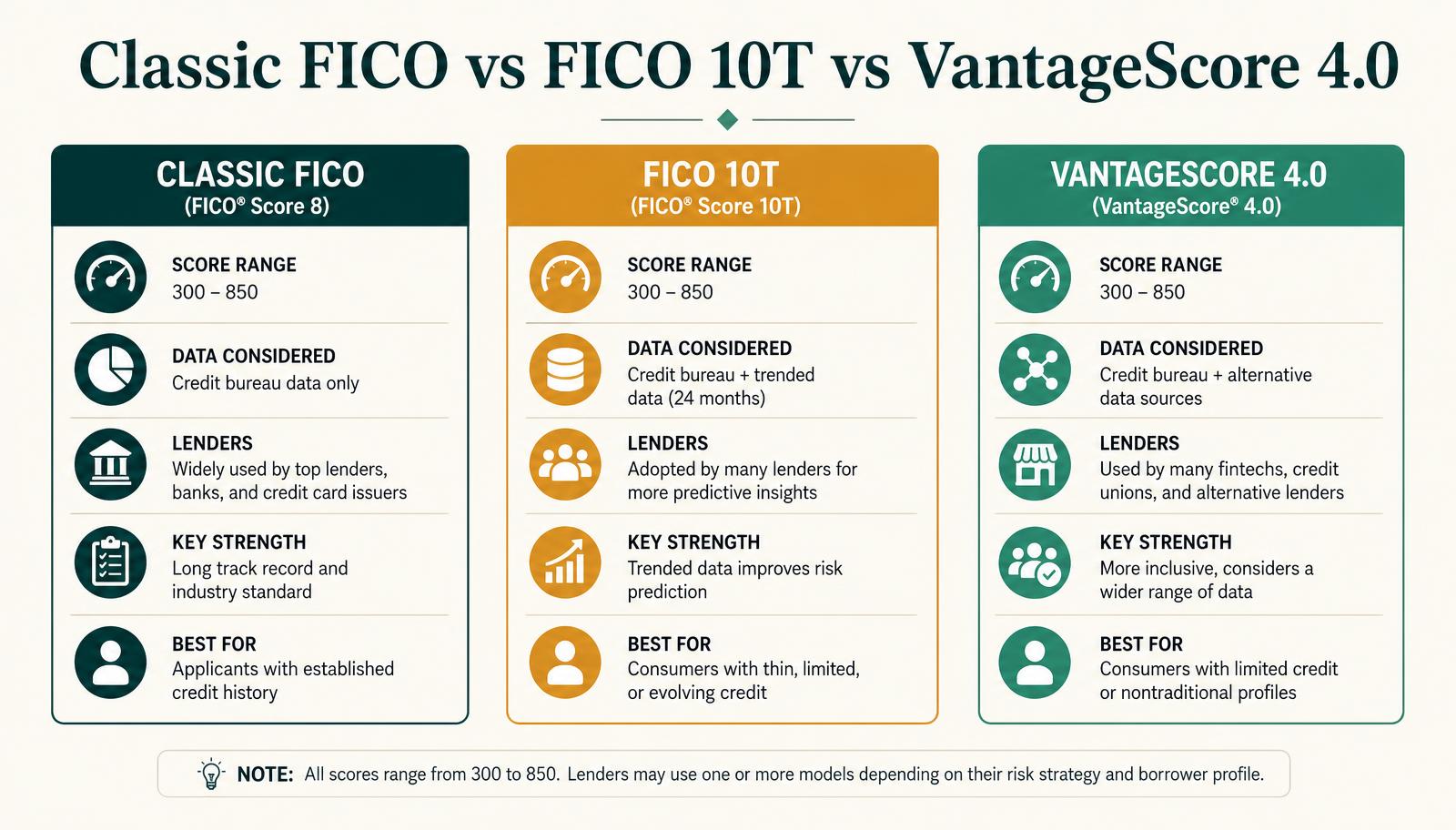
Most consumers never see their mortgage score. The free score in your banking app is usually a VantageScore or a FICO 8 educational score. Mortgage underwriting has traditionally used older, mortgage-specific FICO versions pulled from all three bureaus — often a "tri-merge" where the middle score of the three governs pricing.
Two things are changing at once:
- Newer FICO versions. FICO 10T adds trended data: a rolling 24-month view of balances and payments rather than a single snapshot.
- A second model. VantageScore 4.0 is entering mortgage workflows alongside FICO, and it scores files that Classic FICO cannot score at all.
What trended data actually sees
Classic models ask: what is your balance right now relative to your limit? Trended models ask a richer question: what has your balance been doing every month for two years, and how much of it did you actually pay?
That distinguishes three borrowers who look identical on a snapshot:
- The transactor. Charges $1,500, pays $1,500 every month. Utilization looks the same at statement time, but the balance never persists.
- The steady revolver. Carries $1,500 indefinitely, pays a bit over the minimum.
- The escalator. Balance has climbed from $300 to $1,500 over 18 months.
Under a snapshot model, all three can score similarly. Under a trended model, the transactor is clearly lowest risk and the escalator clearly highest.
Key Facts and Data
- Payment history remains the dominant factor in every model — roughly 35% of a FICO score.
- Amounts owed / utilization is roughly 30%, and this is the factor trended data reshapes most.
- Conventional loans generally require a 620 minimum score; FHA allows 580 with 3.5% down; VA sets no formal floor though lenders commonly impose 620.
- Pricing tiers typically break at 620, 660, 700, 740 and 760. Crossing a boundary matters more than moving 20 points inside one.
- VantageScore 4.0 can score consumers with as little as one month of history, versus the six-month requirement common to FICO.
Who Wins and Who Loses Under the New Models
Likely winners
- Full-balance payers. If you pay statements in full, trended data finally gives you credit for it.
- Thin-file borrowers. Long-term renters, recent immigrants and young adults who were previously unscoreable may get a usable VantageScore 4.0.
- Renters with reported rent. Where rent data reaches the bureaus, VantageScore 4.0 can use it. Our guide to rent reporting covers how to get it on your file.
- People with paid collections. Newer models including VantageScore 4.0 ignore paid collection accounts entirely.
Likely losers
- Chronic revolvers. Carrying a persistent balance is visible now, even if you never miss a payment.
- Balance escalators. A rising two-year trend reads as stress regardless of today's number.
- Last-minute optimizers. Paying everything off the week before you apply no longer erases the history behind it.
How to Prepare: A 12-Month Runway
Months 12–9: Audit and clean
Pull all three reports at AnnualCreditReport.com and read every line. Roughly one in five consumers finds an error, and mortgage pricing is unforgiving about them. Dispute anything wrong using the process in our credit report errors guide, and clear any collection accounts still showing unpaid.

Months 9–6: Change the pattern, not just the number
This is where trended data is won. Start paying statements in full every month. If that is not possible yet, at least make the balance line trend downward month after month rather than flat or rising. A declining 18-month curve reads very differently from a flat one at the same endpoint.
Months 6–3: Optimize utilization properly
Pay before the statement closes, not just before the due date, so the reported balance is low. Aim under 10% overall and on each card. Our utilization guide explains the statement-date mechanic that most people get wrong.
Months 3–0: Freeze everything
Open no new accounts. Close nothing. Avoid large purchases and do not co-sign. Lenders re-pull credit shortly before closing, and a new tradeline at that moment can re-price or sink the loan. If identity theft is a worry, a credit freeze you lift temporarily for the application is the safer posture.
Real-World Impact
Consider a $350,000 loan over 30 years. A borrower at 760 versus one at 660 can face a rate gap approaching a full point. That is roughly $200 or more per month, which is over $70,000 across the life of the loan — for the same house, on the same day, from the same lender.
The wider effect is distributional. Millions of creditworthy renters have been shut out of homeownership for the mundane reason that their payment history was never reported anywhere. Models that read rent and utility data change who is even eligible to be evaluated.

Expert Perspective
Underwriters and housing counselors give consistent advice heading into this transition:
- Do not chase the score you see in an app. Ask a lender for your tri-merge mortgage scores; they are the ones that price the loan.
- Behave like a transactor for a year. It is the single change that helps under every model simultaneously.
- Get pre-approved early. A pre-approval pull surfaces problems while there is still time to fix them.
- Beware rapid rescoring pitches. A legitimate rapid rescore corrects verified errors; it cannot invent history.
Quick Summary
- Mortgage scoring is moving to FICO 10T and VantageScore 4.0.
- Trended data reads 24 months of balances, not one snapshot.
- Paying in full now beats carrying a balance at the same utilization.
- Thin-file and rent-reporting borrowers gain the most.
- Tier boundaries at 620, 660, 700, 740 and 760 drive real pricing.
- Start preparing 6 to 12 months before you apply.
Conclusion and Outlook
The direction of travel is clear: mortgage lending is moving from a photograph of your credit to a film of it. That is broadly fairer — it rewards consistency and it lets responsible renters into the room — but it removes the last-minute shortcuts.
If a home purchase is on your horizon, start the pattern now. Pull your reports, fix the errors, and spend the next year looking like someone who pays in full. Then follow the momentum with our fast-track score guide.
Planning a home purchase? The Honest Credit Rebuild Blueprint walks through the full 12-month preparation plan and is currently 40% off.