Ask ten people what credit utilization should be and nine will say "under 30%." That number has been repeated so often it feels like law. It is not. It is a ceiling that got mistaken for a target, and treating it as a goal is quietly costing millions of people points they could have for free.
Credit utilization is the second-heaviest factor in your FICO score, worth roughly 30% of the total. It is also the only major factor you can change in a matter of days. Understanding how it actually works is one of the highest-return hours you can spend on your credit.
Why Utilization Matters More Than Almost Anything Else
Payment history tells lenders whether you have paid in the past. Utilization tells them how much pressure you are under right now.
A person using 8% of their available credit looks like someone with slack in their budget. A person at 82% looks like someone one bad month away from trouble — even if every payment has been on time. Scoring models treat high utilization as a live risk signal, which is why it can pull a score down hard and fast.
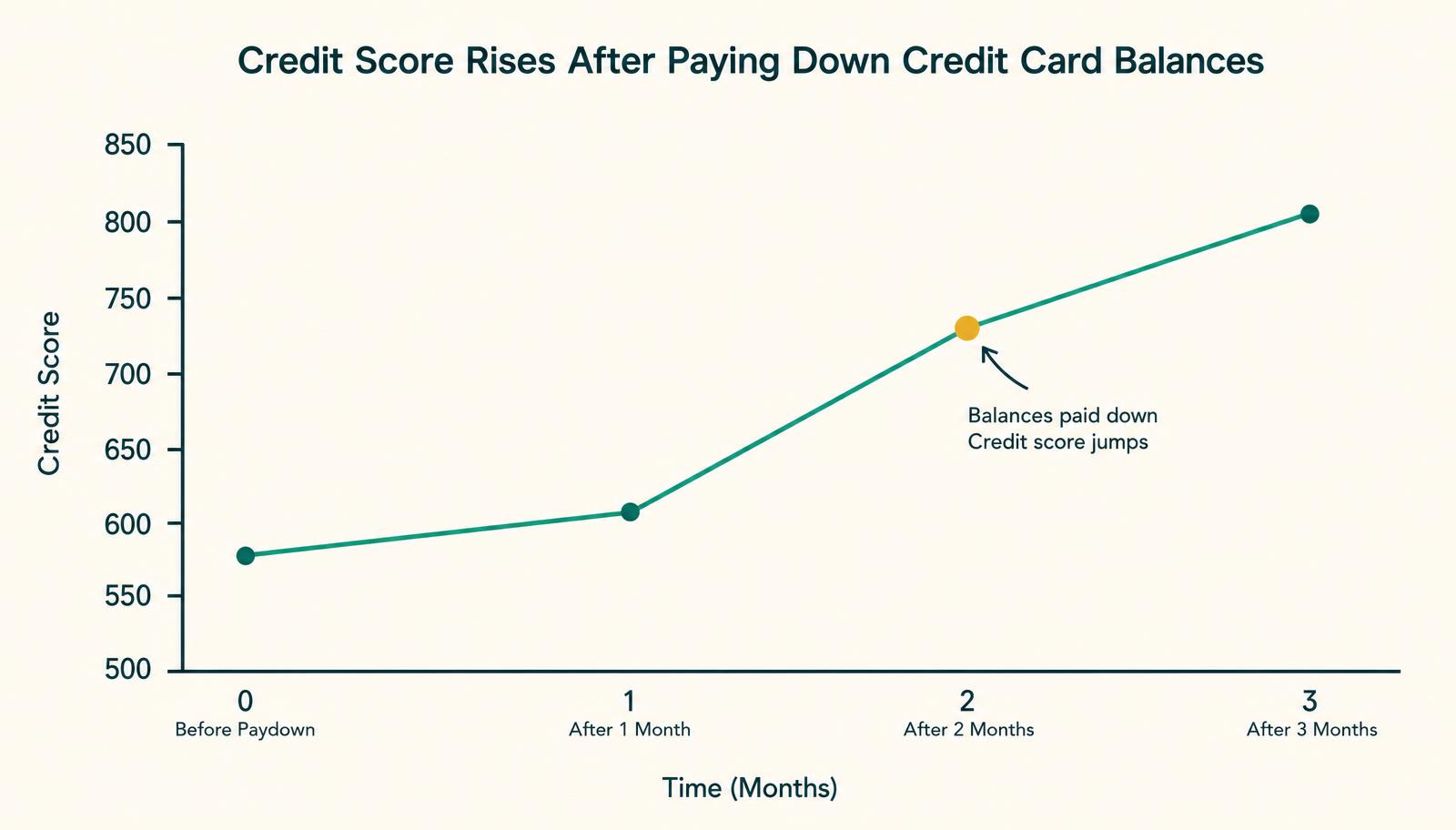
The good news is symmetrical: because utilization is a snapshot rather than a history, the penalty vanishes as soon as the snapshot changes.
How Credit Utilization Is Calculated
The formula is simple:
(Reported balance ÷ credit limit) × 100 = utilization %
A $400 balance on a $2,000 limit is 20%.
But scoring models run that calculation twice:
- Per-card (individual) utilization — each revolving account on its own.
- Aggregate (overall) utilization — total balances across all revolving accounts divided by total limits.
Why the Per-Card Number Trips People Up
Imagine three cards:
| Card | Balance | Limit | Per-card utilization |
|---|---|---|---|
| Card A | $2,900 | $3,000 | 97% |
| Card B | $0 | $5,000 | 0% |
| Card C | $100 | $4,000 | 3% |
| Total | $3,000 | $12,000 | 25% |
Aggregate utilization is a respectable 25% — comfortably inside the mythical 30% rule. But Card A is at 97%, and models penalize that maxed-out account. This single scenario explains a large share of "my utilization is fine, why did my score drop?" confusion.
Only revolving accounts count. Mortgages, auto loans, student loans, and personal loans are installment debt and do not feed your utilization ratio. Charge cards with no preset limit are handled differently depending on the model.
The Real Target: Under 10%, Not Under 30%
Here is where the 30% figure came from: it is roughly the point at which utilization starts doing noticeable damage. It was never a recommendation.
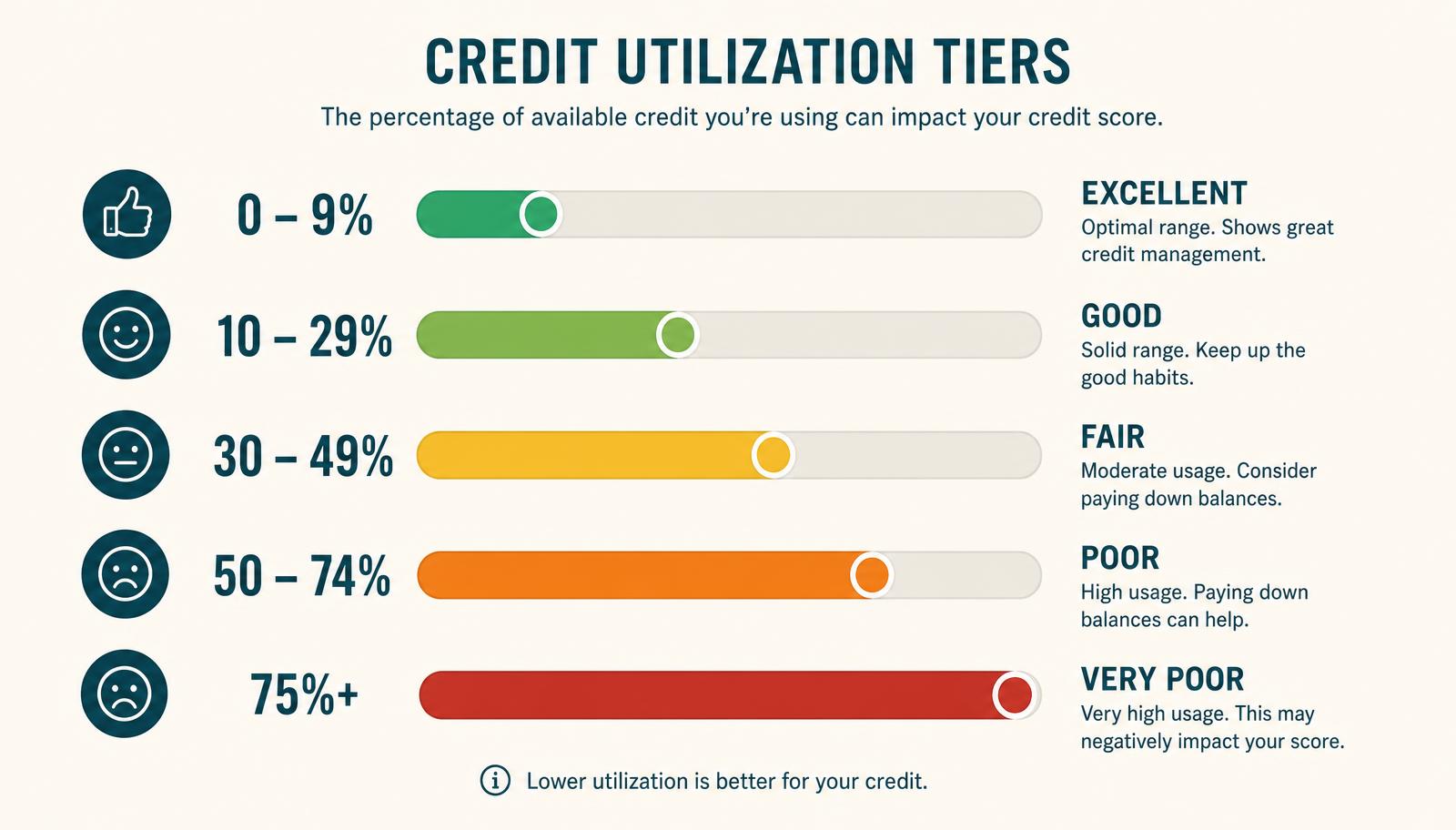
Look at where scoring tiers actually cluster:
- 1%-9% — the sweet spot. Consistently associated with the strongest scores.
- 10%-29% — good. Minimal drag.
- 30%-49% — measurable damage begins.
- 50%-74% — significant damage.
- 75%+ — severe; often the largest single negative on an otherwise clean file.
One nuance worth knowing: reporting a literal 0% on every single card is marginally less optimal than reporting a small balance. Models like to see active, responsibly managed credit. Letting one card report a $15 balance is the classic trick.
The Timing Secret Most People Never Learn
This is the part that changes outcomes.
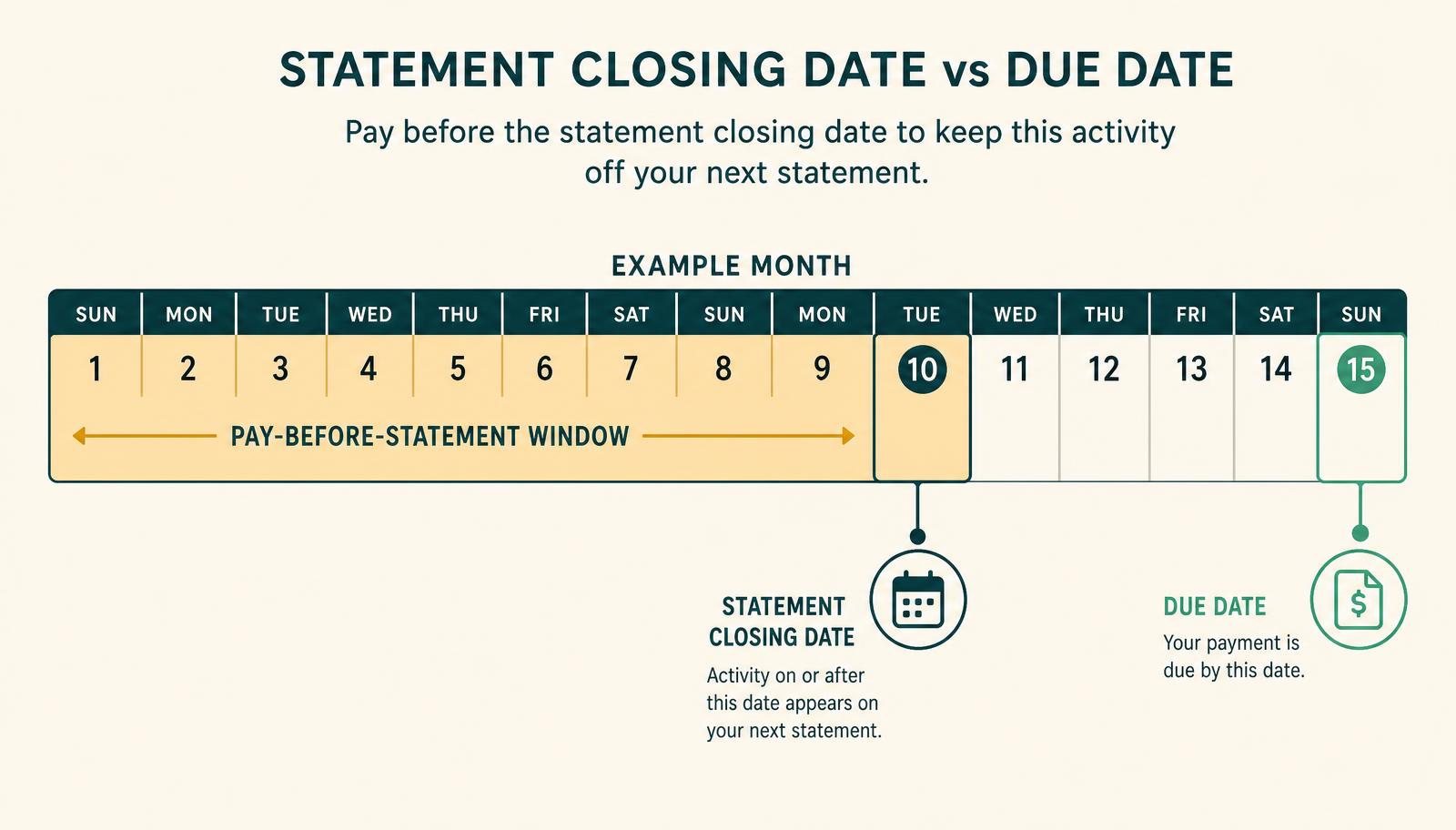
Your card issuer reports your balance to the credit bureaus roughly once a month, and the figure it sends is usually the balance on your statement closing date — not your payment due date.
That means you can pay your bill in full every single month, never carry interest, and still have 70% utilization reported to the bureaus, simply because your statement closed before your payment posted.
The fix costs nothing:
- Find your statement closing date in your card app or on your statement.
- Pay the balance down two to three days before that date.
- Pay any remainder by the due date as usual.
This is called pre-statement payment, and for heavy card users it is often worth more points than anything else they could do in a month.
Seven Ways to Lower Credit Utilization Fast
1. Pay before the statement closes. Free, immediate, and repeatable every month.
2. Make two payments a month. Mid-cycle plus end-of-cycle keeps the reported balance structurally lower.
3. Attack the highest per-card percentage first. Getting one card from 95% to 60% usually helps more than spreading the same money across three low-balance cards. Our guide to paying down debt strategically covers how to sequence this alongside interest costs.
4. Request a credit limit increase. More available credit lowers utilization without paying a cent. Many issuers grant increases with only a soft pull — ask before you apply, and confirm.

5. Open a new card — carefully. A new limit reduces aggregate utilization, but it also adds a hard inquiry and lowers your average account age. Never do this within six months of a mortgage application. Our roundup of secured cards for rebuilding credit covers the safest options for thin or damaged files.
6. Do not close old cards. Closing a card deletes its limit from your total available credit and can spike utilization overnight. Keep it open with a tiny recurring charge instead.
7. Move revolving debt to an installment loan. A personal loan or credit-builder loan is installment debt, so consolidating card balances can drop revolving utilization sharply. Only do this if the rate genuinely improves and you will not re-run the card balances.
Mistakes That Quietly Undo Your Progress
- Chasing 0% on everything. Slightly suboptimal, and it removes evidence of active use.
- Closing a paid-off card out of pride. The most common self-inflicted utilization spike there is.
- Ignoring per-card ratios. A single maxed card can be the reason your score will not move.
- Charging a large purchase right before applying for a loan. One statement cycle can shift your reported utilization by 40 points' worth of impact.
- Assuming a paid-in-full card reports zero. It reports whatever the statement showed.
Quick Summary
Credit utilization is about 30% of your FICO score, calculated as reported balance divided by credit limit — both per card and in aggregate. The 30% rule is a damage threshold, not a goal; aim for 1%-9%. Because issuers report your statement-closing balance, paying a few days before that date is the fastest legitimate score improvement available to most people. Raise limits, keep old cards open, prioritize the highest per-card ratios, and remember that utilization has no memory: fix the number and the penalty disappears with the next report.
Conclusion and Future Outlook
Newer scoring models such as FICO 10T and VantageScore 4.0 use trended data — they look at your balances over the past two years, not just this month's snapshot. That makes one-month utilization tricks less powerful over time and rewards a genuinely lower pattern of balances. The direction of travel is clear: consistency is going to matter more than timing.
Which is really the same advice, just with a longer horizon. Get the number down, then keep it down.
Start with our Credit Cards hub for card-specific tactics, or work through the Credit Basics fundamentals if you want the full picture of how the five scoring factors fit together.
Want the complete system in one place? Grab The Honest Credit Rebuild Blueprint — our full step-by-step guide to lowering balances, repairing your report, and rebuilding your score for good. For a limited time, save 40% at checkout.
What is your current utilization? Drop it in the comments, and share this guide with someone still aiming for 30%.
Authoritative sources: the Consumer Financial Protection Bureau explains how credit card balances and limits are reported, MyFICO publishes the official weighting of amounts owed in FICO scores, and free weekly reports from all three bureaus are available at AnnualCreditReport.com.