Your credit score is more than a number. In 2026, it is the gatekeeper to lower car payments, apartment approvals, better insurance rates, and the mortgage you want. The good news? You do not need years to move the needle. If you know how to improve your credit score, you can start seeing results in as little as one billing cycle — and the habits you build today can keep your score climbing for years.
This guide is a complete, fact-based roadmap. It covers what actually moves your score, the fastest levers to pull, and the mistakes that keep people stuck. We also link to the tools and deeper guides on CreditRise that make each step easier.
Why Improving Your Credit Score Matters Right Now
Credit conditions shift constantly, but one rule stays the same: a higher score saves you money. In 2026, the average auto loan borrower with a "good" score pays thousands less in interest over the life of the loan than someone with a "fair" score. Apartment landlords, insurance companies, and even some employers use credit information as a shorthand for reliability.
That means your score is not a vanity metric. It is a daily-cost metric. The difference between a 620 and a 720 score can easily equal a month's rent or more in avoided interest every year. And because credit scores are forward-looking, every positive action you take today starts rewriting the story lenders read tomorrow.
The most exciting part: improving your credit score fast is possible because the two biggest scoring factors — payment history and credit utilization — are also the ones you can influence most directly.

Background: What Your Credit Score Really Measures
Before you can raise your score, it helps to understand what it is measuring. Most lenders use a FICO score, which ranges from 300 to 850. VantageScore is another common model, but both weigh the same five categories in roughly the same order.
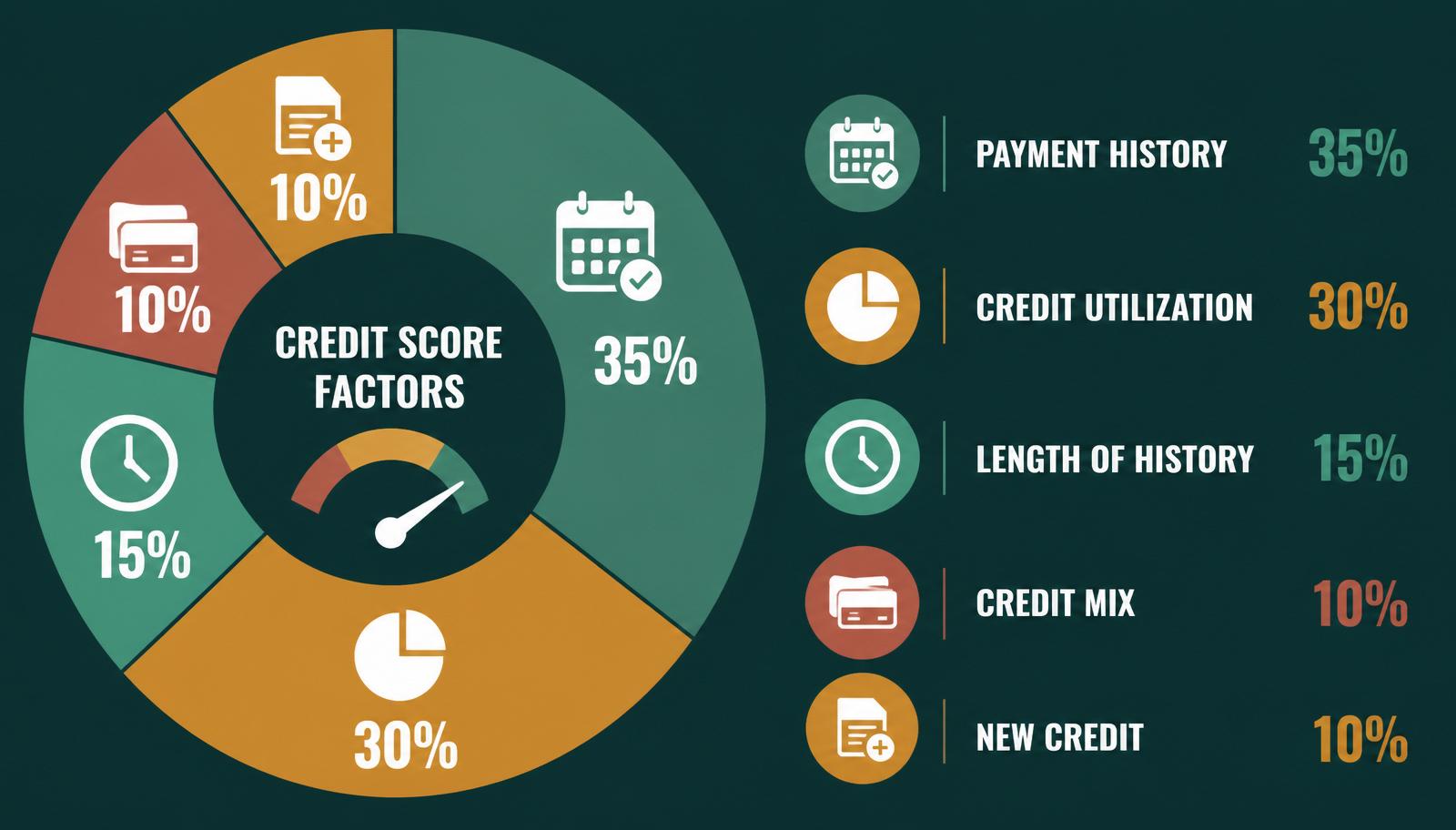
Understanding the percentages tells you where to spend your energy:
- Payment history (~35%) — do you pay bills on time, every time?
- Amounts owed / credit utilization (~30%) — how much of your available credit are you using?
- Length of credit history (~15%) — how old is your average account?
- Credit mix (~10%) — do you have both revolving and installment accounts?
- New credit / inquiries (~10%) — how often are you applying for new credit?
Notice that payment history and utilization alone make up about 65% of the score. If you only focus on those two categories, you are already addressing most of the weight. The other factors matter, but they move more slowly or account for smaller slices.
What counts as a good credit score?
- 300–579: Poor
- 580–669: Fair
- 670–739: Good
- 740–799: Very good
- 800+: Exceptional
If you are starting in the "fair" or "poor" range, the fastest wins usually come from fixing errors and lowering utilization. If you are already in the "good" range, the path to "very good" is mostly about consistency and patience.
Step-by-Step: How to Improve Your Credit Score Fast
Step 1: Pull your credit reports and check for errors
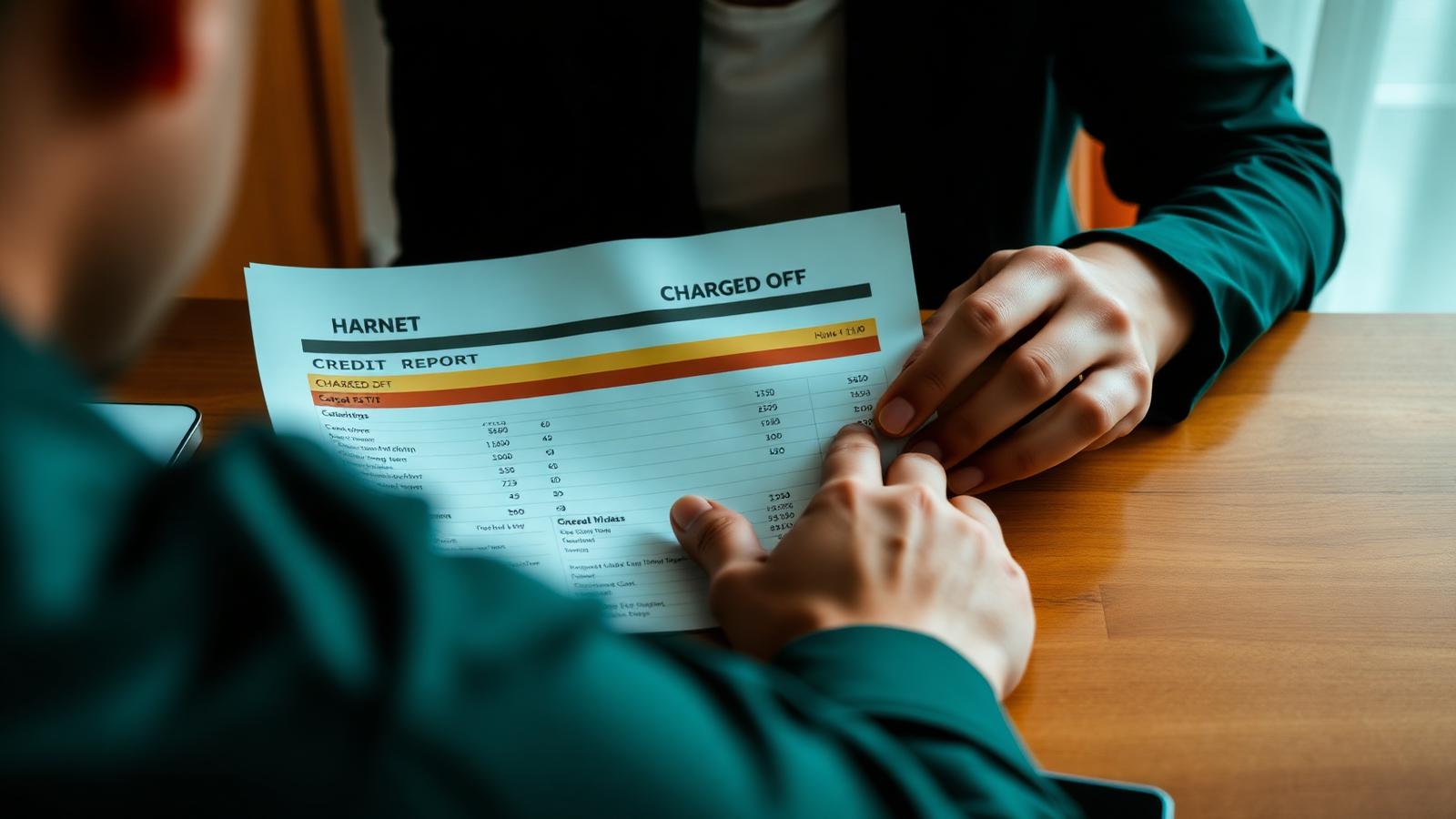
This is the highest-return first step. Go to AnnualCreditReport.com and download your free reports from all three bureaus — Equifax, Experian, and TransUnion. Weekly free access is currently available, so cost is not an excuse.
Read every account, balance, and payment status. Look for:
- Accounts you do not recognize.
- Payments marked late that were actually on time.
- Balances or limits that look wrong.
- Duplicate collections or old debts that should have fallen off.
- Accounts still showing a balance after a settlement or bankruptcy discharge.
If you find errors, dispute them. Our detailed guide on how to fix errors on your credit report walks through the exact dispute process. Correcting even one significant error can lift your score within weeks.
Step 2: Pay every bill on time
This is the single most important habit. Because payment history is the largest scoring factor, a single 30-day late payment can drop a good score by 50–100 points. The good news is the reverse is also true: a steady string of on-time payments rebuilds trust quickly.
Set up autopay for at least the minimum payment on every card and loan. If you cannot autopay the full balance, autopay the minimum and make an extra manual payment when you can. The goal is never to miss a due date.
If you have past late payments, they lose power over time. A late payment from three years ago hurts far less than one from three months ago. The best thing you can do is stack new, perfect months on top of it.

Step 3: Lower your credit utilization
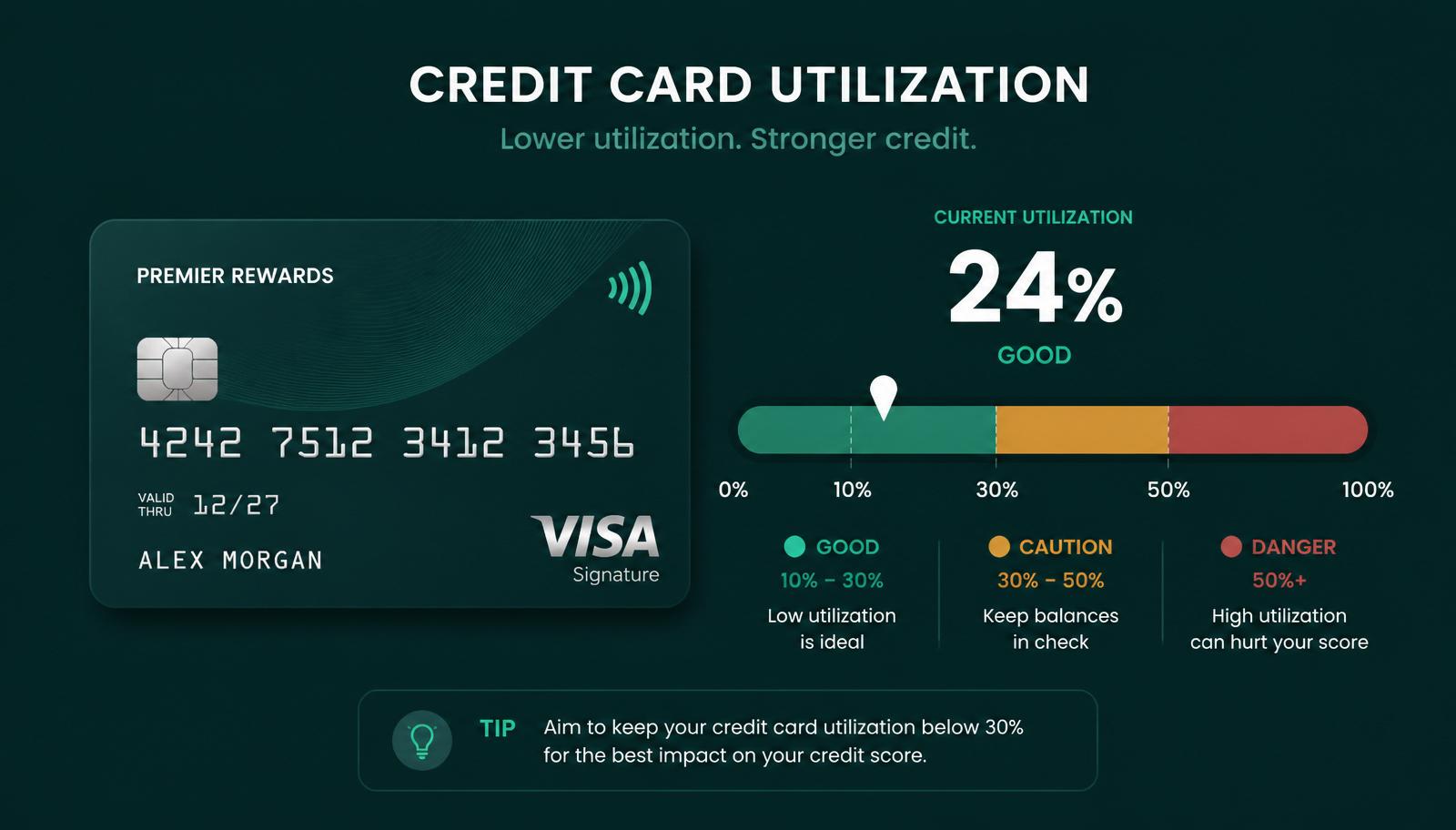
Credit utilization is the second-largest factor, and it has no memory. That means lowering your balances can improve your score as soon as the credit card company reports the new balance to the bureaus — usually once per month.
Aim for these targets:
- Under 30% of each card's limit as a baseline.
- Under 10% if you want the fastest score boost.
- $0 reported balance on most cards if you are chasing an elite score, but keep one card with a small balance so the scoring models see active use.
Example: if you have a $1,000 limit, try to keep your reported balance under $100. If you cannot pay it down that far, even moving from 80% to 30% utilization can produce a meaningful score jump.
There are two ways to improve utilization:
- Pay down balances. This is the cleanest approach and also saves you interest.
- Ask for a higher limit. If your income has risen and your account is in good standing, a limit increase lowers your utilization without changing your spending. Just do not let the higher limit tempt you to spend more.
Step 4: Add positive payment history
If your credit file is thin, adding new, positive accounts can help. The two most common tools are:
- Secured credit cards. You put down a refundable deposit and use the card like any other. Choose one that reports to all three bureaus and has no annual fee. Our guide to the best secured credit cards to rebuild credit in 2026 compares the top options.
- Credit-builder loans. You make monthly payments into a locked savings account, and at the end you receive the money back. These add installment history and build savings at the same time.
If you are recovering from bankruptcy or collections, the fastest path usually starts with a secured card or credit-builder loan. Pair it with the month-by-month plan in our rebuilding-after-bankruptcy guide.
Step 5: Use alternative data
Services like Experian Boost and rent-reporting platforms can add bills you already pay — utilities, streaming subscriptions, phone bills, rent — to your credit file. These are optional, but they can give a quick nudge, especially if your file is thin or you are rebuilding from a low score.
The key is to only add accounts you already pay perfectly. Adding a bill you sometimes miss would backfire.
Step 6: Be careful with new applications
Every time you apply for a new credit card or loan, the lender usually pulls a hard inquiry on your report. Each hard inquiry can lower your score by a few points, and multiple inquiries in a short window can add up.
The impact is small and temporary, but if you are trying to maximize your score before a major application — like a mortgage or auto loan — it is worth spacing out new credit applications. The exception is rate shopping for certain loans; FICO treats multiple auto or mortgage inquiries within a short window as a single inquiry.
Step 7: Keep old accounts open
The length of your credit history matters. Closing your oldest credit card can shorten your average account age and reduce your total available credit — both of which can hurt your score.
If an old card has no annual fee, keep it open. Use it for one small purchase every few months so the issuer does not close it for inactivity. If it has an annual fee, call and ask if the issuer can downgrade it to a no-fee version before you close it.
Key Facts and Data
- FICO scores range from 300 to 850, and payment history alone accounts for about 35% of the calculation.
- Credit utilization accounts for about 30% of your FICO score, making it the fastest lever to pull month to month.
- According to industry data, moving from a subprime score to a prime score can save a borrower over $10,000 on an average auto loan.
- The Fair Credit Reporting Act gives you the right to one free credit report per week from each bureau at AnnualCreditReport.com.
- Hard inquiries typically stop affecting your score after 12 months and fall off your report entirely after 24 months.
Real-World Impact: What a Higher Score Unlocks
A higher credit score is not just a number on a screen. It translates into real money and real options:
- Lower interest rates on mortgages, auto loans, and personal loans.
- Smaller or waived security deposits on apartments and utilities.
- Better credit card offers, including rewards cards and 0% APR promotions.
- Lower insurance premiums in states that allow credit-based insurance scoring.
- More negotiating power when you do need to borrow.
For someone rebuilding from the 500s to the 700s, the total lifetime savings can be tens of thousands of dollars — not from one big win, but from slightly better terms on every loan, card, and lease for years.
Common Mistakes That Keep People Stuck
- Ignoring credit reports. You cannot fix what you do not see. Pull all three reports regularly.
- Carrying high balances. High utilization can drag down your score even if you never miss a payment.
- Applying for too many cards at once. Multiple hard inquiries and new accounts can temporarily lower your score.
- Closing old accounts. This can hurt your average account age and reduce your available credit.
- Paying for credit repair. Everything a legitimate credit repair company does, you can do yourself for free.
- Waiting for a magic fix. There is no secret hack. The score responds to consistent, positive behavior.
Quick Summary
Improving your credit score fast comes down to a few high-impact actions: check your reports for errors, pay every bill on time, lower your credit utilization, add positive accounts if your file is thin, and avoid unnecessary new applications. Do those things consistently, and your score will climb — often faster than you expect.
Conclusion and Future Outlook
In 2026, improving your credit score is one of the most profitable financial projects you can undertake. The tools are free, the steps are simple, and the results compound for years. You do not need perfect credit tomorrow — you just need to start moving in the right direction today.
Your best first move: pull your free credit reports, check your current utilization, and set up autopay on every account. Then browse our Credit Reports & Scores hub for deeper guidance, or start rebuilding with the best secured credit cards and our step-by-step rebuilding plan.
Want the complete system in one place? Grab The Honest Credit Rebuild Blueprint — our full step-by-step guide to repairing your report, rebuilding your score, and reclaiming your financial freedom. For a limited time, save 40% at checkout.
Have a question or a credit win to share? Leave a comment below and share this guide with someone who needs a score boost this year.
Authoritative sources: the Consumer Financial Protection Bureau, MyFICO, and the Federal Trade Commission publish free, official guidance on credit scoring, credit reports, and your rights as a consumer.