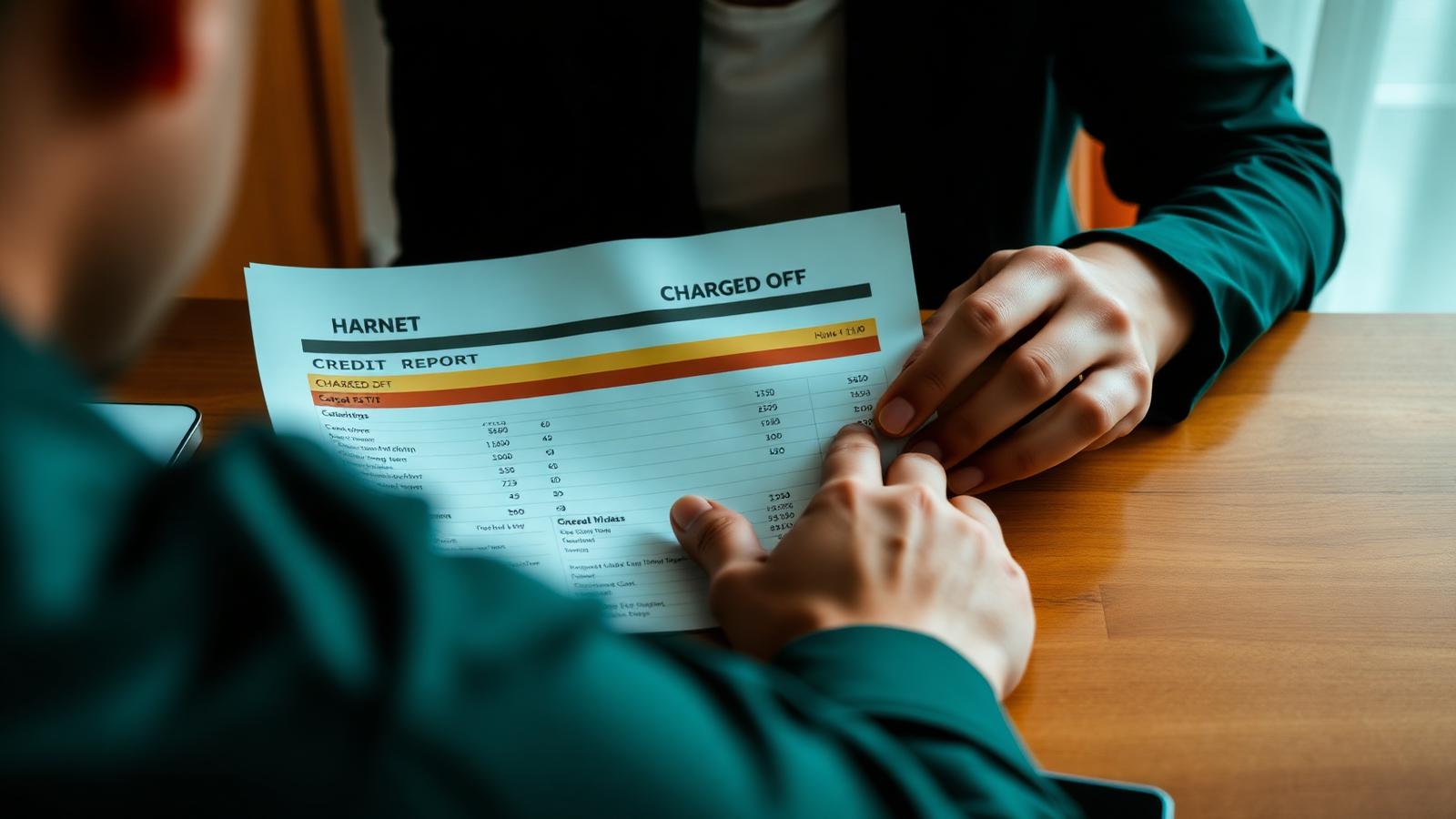
Few phrases on a credit report cause more confusion than charge off on credit report. It sounds like the lender gave up and walked away. In reality, a charge-off is an internal accounting event: after roughly six months without payment, the creditor moves the balance from "expected income" to "loss" on its own books.
You still owe the money. The account is still collectible. And the entry sits on your credit file for seven years, quietly costing you approvals, deposits and interest rate points the entire time.
This guide explains exactly what happens, what it costs, and the realistic options for cleaning it up in 2026.
Why Charge-Offs Matter Right Now
Household balances have kept climbing while wage growth has flattened, and delinquency rates on credit cards and auto loans have crept back toward pre-pandemic highs. That means more accounts crossing the 180-day line — and more consumers discovering a charge-off on a report they only pulled because a landlord or lender asked for it.
The timing matters because charge-offs are one of the most heavily weighted derogatory marks in scoring models. On a file that is otherwise clean, a single charge-off can pull a score down by 100 points or more. On a thin file, it can make the difference between a scoreable profile and an automatic decline.
Background: How an Account Becomes a Charge-Off
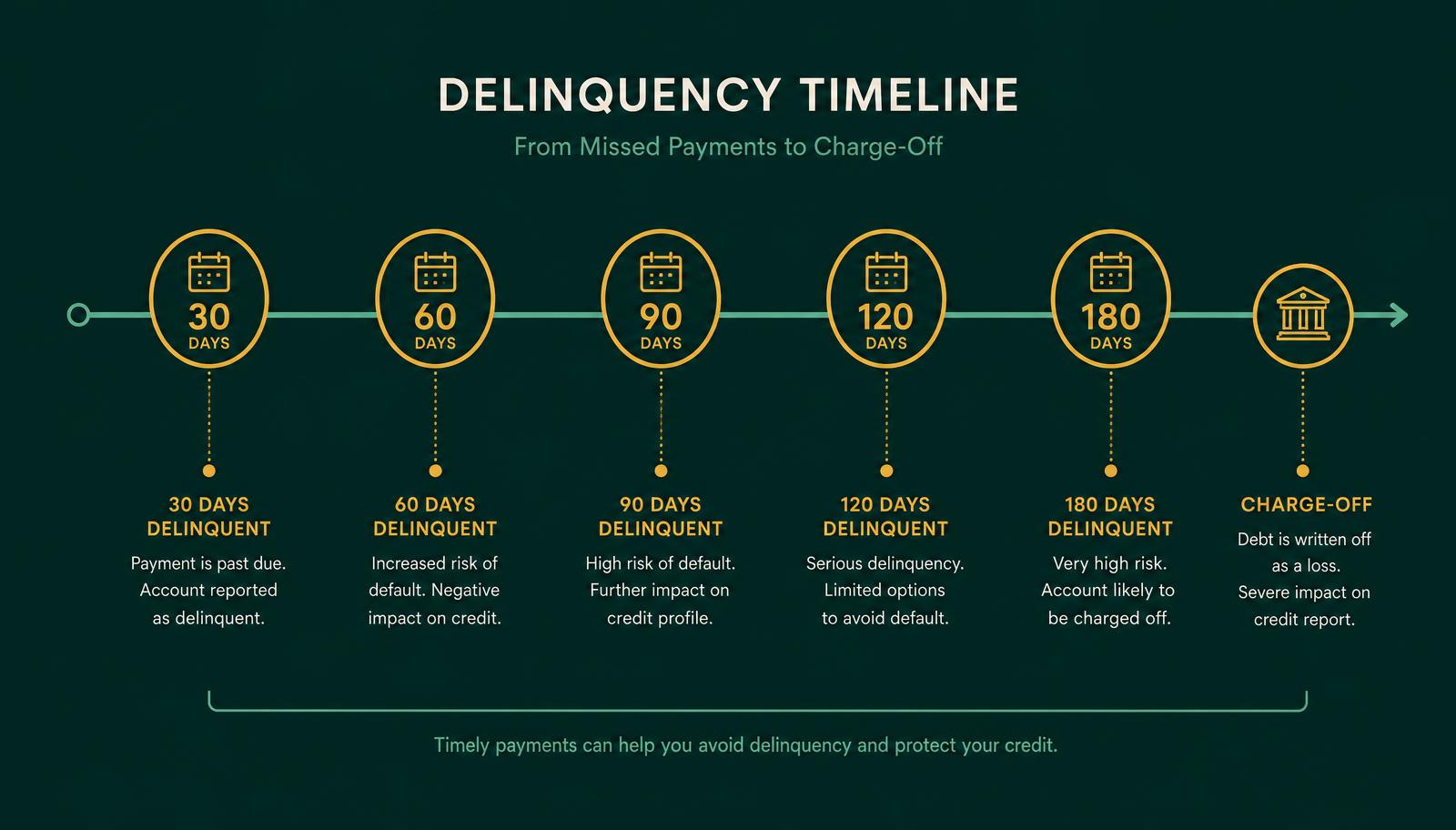
The path is predictable, and every stage leaves its own mark on your report.
- 30 days late. The first late payment is reported. Score damage begins immediately.
- 60 days late. A second delinquency is reported and collection calls intensify.
- 90 days late. The account is now seriously delinquent; many lenders close it to new charges.
- 120–150 days late. Internal recovery efforts escalate; settlement offers often appear here.
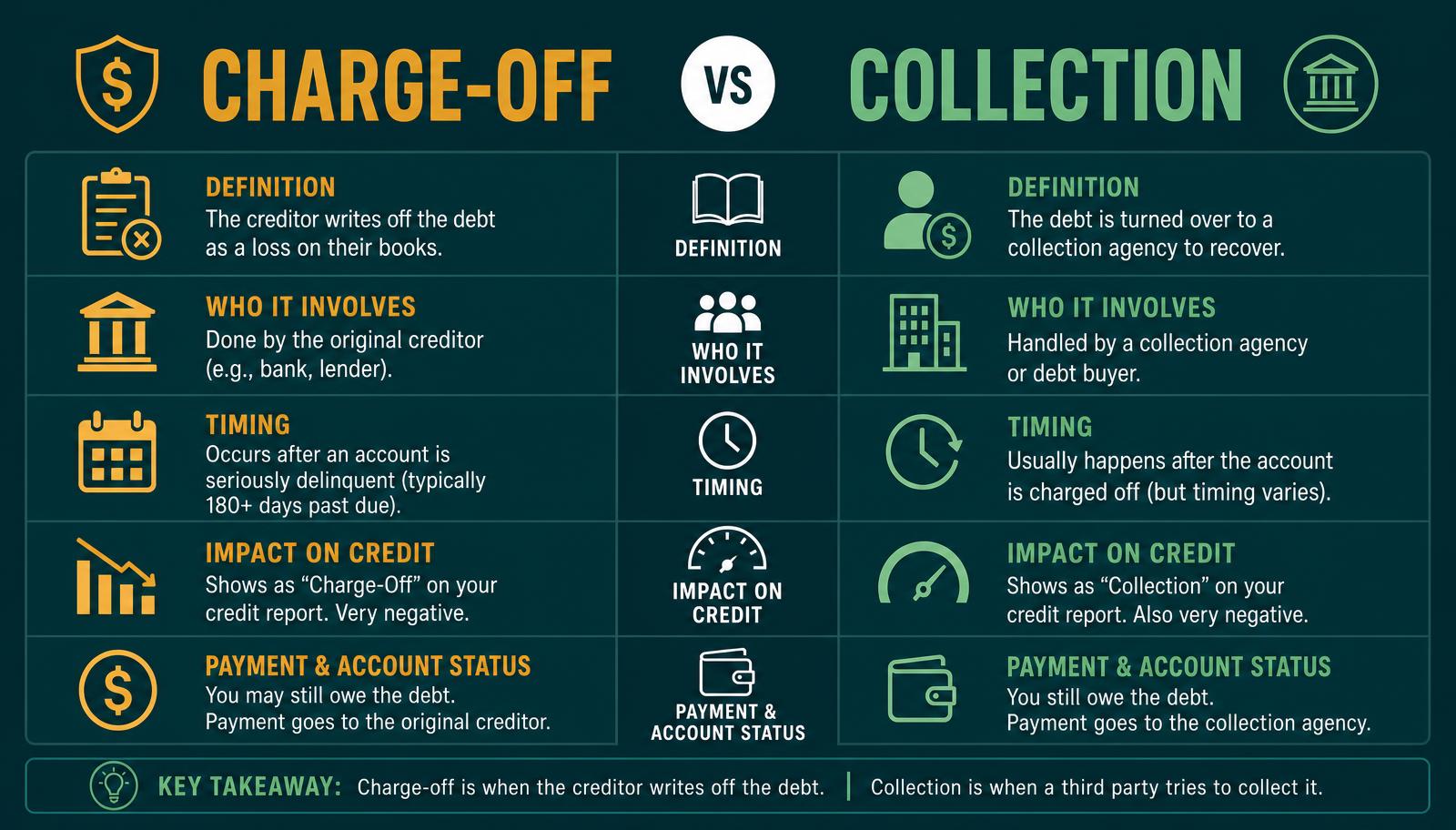
- 180 days late. The creditor charges the balance off as a loss and reports the status change.
The 180-day standard applies to most revolving credit. Installment loans and auto loans follow different timelines, and secured debt usually goes to repossession or foreclosure instead.
Charge-off vs. collection: the distinction that trips people up
- A charge-off is reported by the original creditor. The account stays in their name.
- A collection appears when the debt is sold or assigned to a third-party agency, which reports a new tradeline.
- The same debt can produce both entries — a charge-off from the bank and a collection from the buyer. That is legal, as long as the charge-off shows a zero balance once the debt is sold.
If both show a balance at the same time, that is a reporting error worth disputing. Our guide to removing collections from your credit report covers the second half of that fight in detail.
Key Facts and Data
- Charge-offs typically occur at 180 days past due for credit cards.
- The entry remains for seven years from the date of first delinquency (DOFD) — the original missed payment, not the write-off date.
- Paying the debt does not reset or extend the seven-year clock. Federal law ties the clock to the DOFD precisely so that late payment cannot restart it.
- A charge-off is considered a major derogatory, in the same tier as a repossession or a bankruptcy notation, and is weighted far more heavily than an isolated 30-day late.
- Debt buyers routinely purchase charged-off portfolios for pennies on the dollar, which is exactly why settlement offers below the full balance are so common.
- The statute of limitations on suing for the debt is set by state law, usually three to six years, and is separate from the seven-year credit reporting window.
Step 1: Pull All Three Reports and Verify the Details
Do not negotiate anything before you know what is actually being reported. Get your free reports from AnnualCreditReport.com, the only federally authorized source, and check each charge-off line by line.
Look for:
- Wrong date of first delinquency. This is the single most valuable error to find, because a DOFD that is too recent keeps the mark on your file for extra years.
- Wrong balance. A charged-off account sold to a debt buyer should show a zero balance with the original creditor.
- Duplicate reporting. The same debt listed twice by two agencies inflates the damage.
- Accounts you do not recognize. These may be identity theft, in which case stop and freeze your credit before doing anything else.
- Status mismatches between the three bureaus. Errors frequently appear on one report and not the others.
Anything inaccurate is a dispute, not a negotiation. Our walkthrough on how to fix errors on your credit report has the letter templates and the timelines.
Step 2: Decide Whether to Pay, Settle, or Wait
There is no universal answer, but there is a clear decision framework.
Pay in full if:
- You plan to apply for a mortgage in the next two years. Manual underwriters commonly require charge-offs to be resolved before approval, a point covered in our 2026 mortgage credit score guide.
- The balance is small enough that the peace of mind is worth more than the cash.
- The debt is recent and the creditor still owns it — legal exposure is highest here.
Settle for less if:
- The debt has been sold to a buyer, who paid a fraction of face value and has room to discount.
- You can pay a lump sum. Settlements of 30–60% are routine on older accounts.
- You get the terms in writing before you pay, including exactly how the account will be reported afterwards.
Wait if:
- The account is close to falling off naturally and the statute of limitations has expired.
- You cannot pay without missing current obligations. Never let a current account go late to chase an old one — the fresh delinquency costs more.

Step 3: Negotiate Correctly
If you decide to resolve the debt, the process is the same whether you pay or settle.
- Request debt validation first if a third party is involved. You have the right to written verification, and a surprising number of old accounts cannot be validated cleanly.
- Never pay over the phone on the first call. Get the offer in writing on company letterhead.
- Ask for a "paid in full" status rather than "settled for less than full balance" when possible. The former reads better to a human underwriter.
- Ask about deletion. Pay-for-delete is not guaranteed and many creditors refuse on policy grounds, but debt buyers agree more often than people expect. It costs nothing to ask in writing.
- Pay by traceable method and keep the confirmation forever.
- Check your reports 30 to 45 days later to confirm the status actually updated.

Step 4: Rebuild Around the Mark
A charge-off you cannot remove still fades. Scoring models weight recent behaviour more heavily every month, and a two-year-old charge-off surrounded by clean payments does far less damage than a fresh one on an empty file.
The rebuilding stack that works:
- Perfect payment history going forward. Payment history is roughly 35% of a FICO score, and it is the only factor entirely inside your control.
- Low utilization. Keeping reported balances in single digits produces score movement within one or two statement cycles. See our credit utilization guide for the reporting-date trick.
- A positive open tradeline. A secured card or a credit-builder loan adds fresh, clean data to a file that currently only shows damage.
- Time. Unglamorous, but the seven-year clock is running whether you engage with it or not.
Real-World Impact
A charge-off is not just a number on a page. It shows up as a larger security deposit from a utility, an auto loan quoted at 18% instead of 7%, an apartment application that needs a co-signer, and a mortgage file that stalls in underwriting.
Run the numbers on a $30,000 car loan: the gap between a 640 and a 720 score can exceed $4,000 in interest across five years. That is the real price of leaving a charge-off unaddressed — not the shame, the arithmetic.
Consumers who dispute inaccuracies also have real leverage. The Consumer Financial Protection Bureau's guidance on charge-offs and disputes explains your rights under the Fair Credit Reporting Act, and the Federal Trade Commission's debt collection FAQs cover what collectors can and cannot do while pursuing a charged-off balance.
Mistakes That Make a Charge-Off Worse
- Making a small payment on a time-barred debt. In several states this can restart the statute of limitations and expose you to a lawsuit.
- Paying before validating. Once you pay, your leverage is gone.
- Accepting a verbal agreement. If it is not in writing, it did not happen.
- Hiring a credit repair company for a valid debt. No one can legally remove accurate information, whatever the sales page says.
- Ignoring the mail. A default judgment from an unanswered lawsuit is far worse than the charge-off itself.
Key Takeaways
- A charge-off is an accounting write-off, not debt forgiveness.
- The seven-year clock runs from the first delinquency, and paying does not restart it.
- Verify the DOFD and balance before you negotiate — errors here are common and valuable.
- Pay or settle in writing, and ask for the best available reporting status.
- Rebuild with clean, current tradelines while the mark ages out.
Conclusion and Outlook
Charge-offs feel permanent because the language is severe, but the reality is more manageable. Verify what is reported, fix what is wrong, resolve what is valid, and then bury the mark under two years of clean behaviour. That sequence works, and it works without paying anyone to do it for you.
Start by pulling your three free reports today, then follow our fast-track score guide to rebuild the file around it.
Want the full playbook? The Honest Credit Rebuild Blueprint walks through disputes, negotiation scripts and the 12-month rebuild — currently 40% off.