Every large data breach ends the same way: names, dates of birth and Social Security numbers circulate on the open market. Monitoring services will tell you after someone opens an account in your name. A credit freeze stops the account from being opened in the first place.
It is free. It takes about twenty minutes across all three bureaus. It does not touch your credit score. It is, dollar for dollar and minute for minute, the strongest consumer protection available — and most people still have not done it.
Why This Matters More Every Year
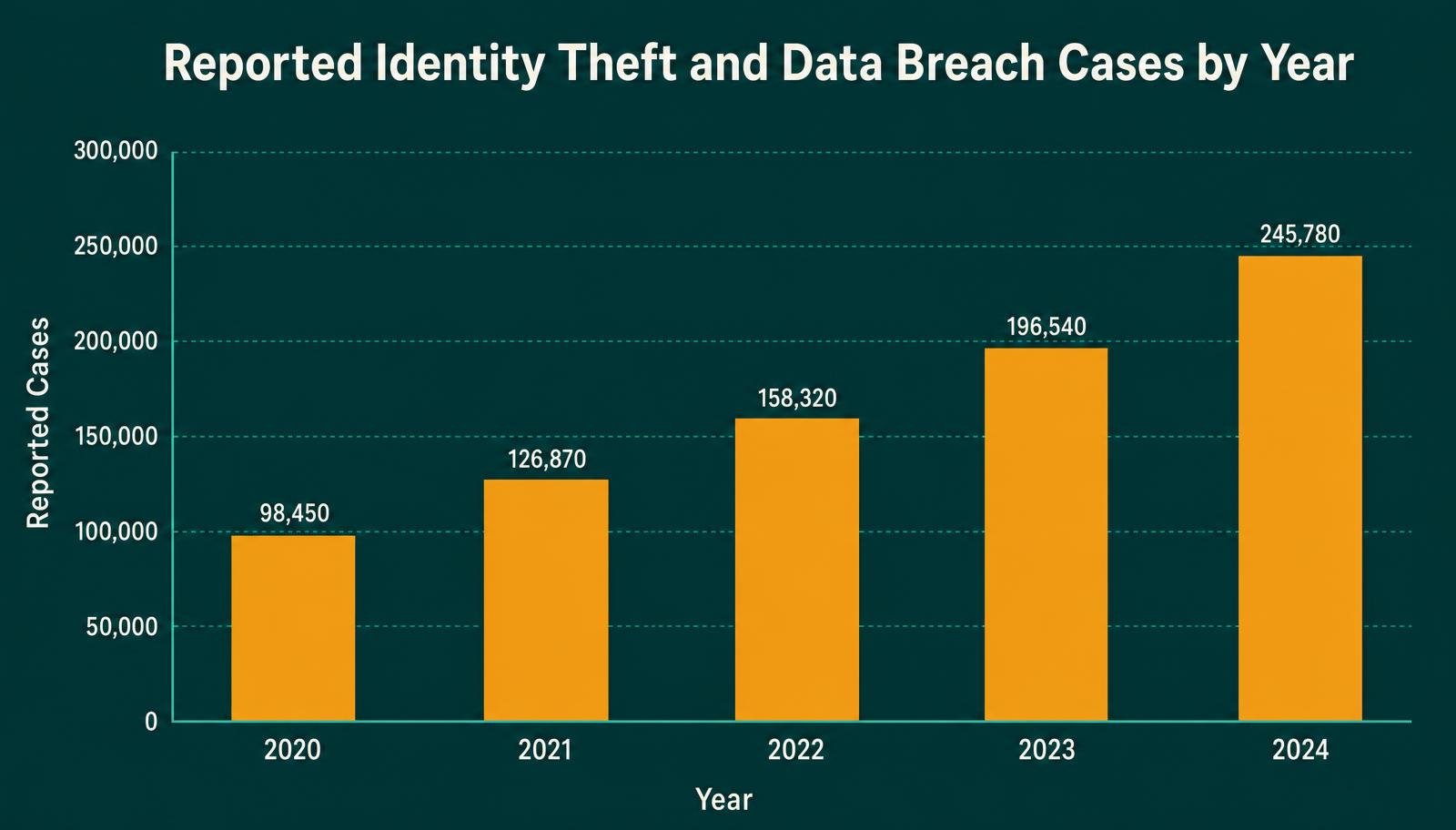
Identity theft and breach-driven fraud have climbed steadily, and the underlying reason is structural: the identifying data lenders use to verify you is permanently exposed. You cannot change your date of birth, and changing a Social Security number is close to impossible.
Since the data cannot be recalled, the only durable defense is to make the data useless. That is exactly what a freeze does: when a lender tries to pull your file to approve a new account, the pull fails. No file, no approval, no fraudulent account.
What a Credit Freeze Does — and Does Not Do
A freeze does:
- Block new creditors from accessing your credit file
- Stop most new-account fraud before it starts
- Stay in place indefinitely until you lift it
- Cost nothing to place, lift or remove
A freeze does not:
- Affect your credit score
- Block your existing lenders, who can still see your file
- Stop fraud on accounts you already have — that is a card-monitoring problem
- Prevent you from getting your own free credit reports
- Block employment or insurance screening in every state
That last point is worth internalizing: a freeze is a new-account defense, not a universal shield. Pair it with card alerts and regular report reviews.
Freeze vs. Lock vs. Fraud Alert
These three get conflated constantly, and the differences are real.
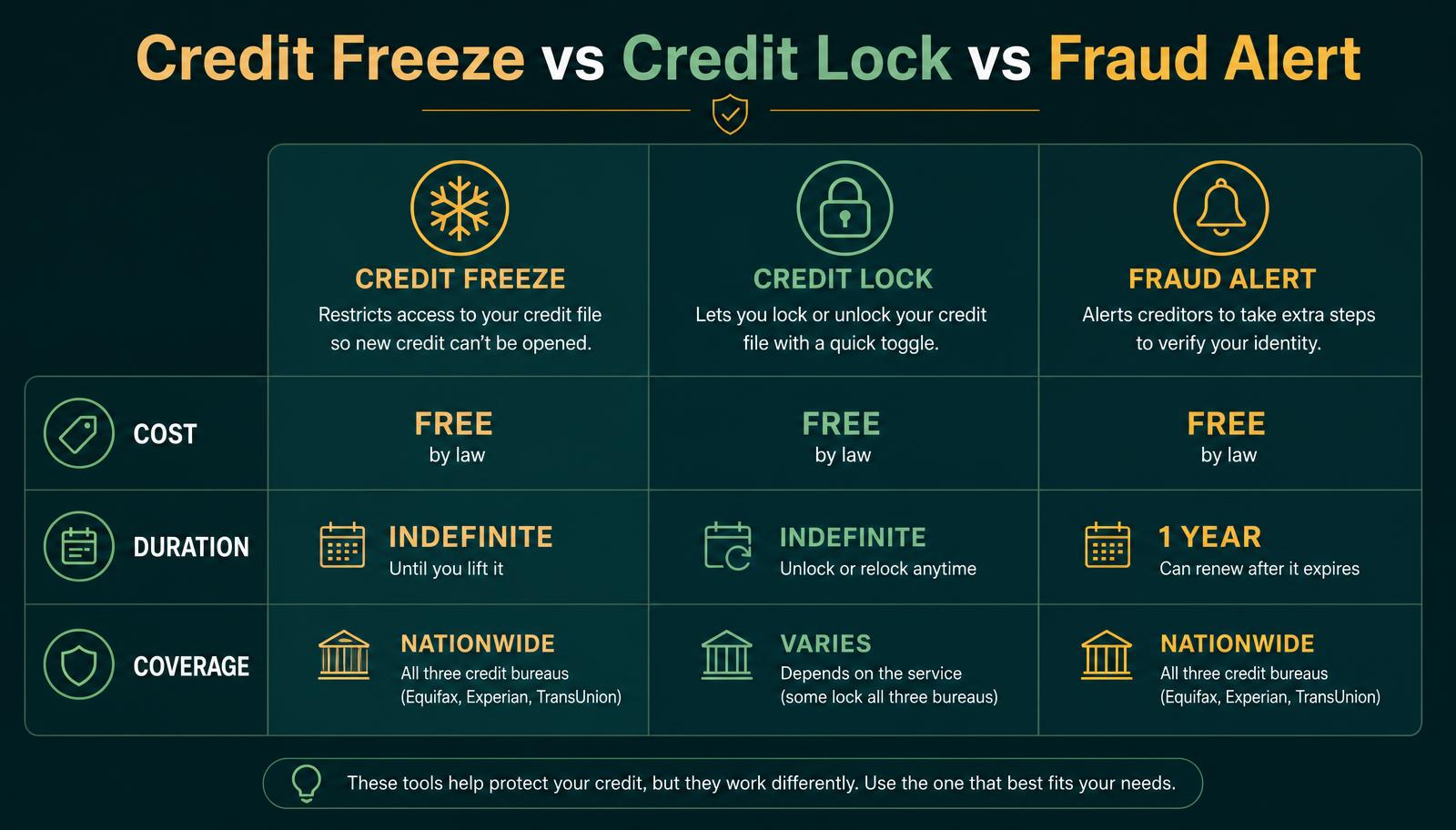
- Credit freeze. A statutory right. Free by law at all three bureaus, indefinite, with legal remedies if a bureau fails to comply.
- Credit lock. A bureau product with a similar effect and usually a slicker app. Governed by a contract you agree to, sometimes bundled into a paid subscription. Convenient, but it is a service, not a right.
- Fraud alert. Free, lasts one year (seven for confirmed identity theft victims), and requires lenders to take extra steps to verify your identity — but it does not block access. Placing one with any single bureau obligates it to notify the other two.
For most people the correct answer is: freeze all three, and use a fraud alert as an additional layer if you have already been victimized.
How to Freeze Your Credit: Step by Step
You must do this separately at each of the three nationwide bureaus — Equifax, Experian and TransUnion. A freeze at one does nothing at the others.

Before you start, gather:
- Full legal name, current and recent addresses
- Date of birth and Social Security number
- A government ID and, sometimes, a utility bill for verification
Then, at each bureau:
- Go to the bureau's official security freeze page directly — type the address rather than following an emailed link.
- Create an account or verify your identity through the knowledge-based questions.
- Place the freeze.
- Save the PIN or confirmation details in a password manager. Some bureaus issue a PIN required to lift the freeze later; losing it means an identity-verification process by mail.
- Repeat at the next bureau.
The official starting points are published and maintained by the Federal Trade Commission's identity theft site and the CFPB's guidance on security freezes. Use those rather than searching, because search results for "credit freeze" are heavily populated with paid look-alike services charging for something the law makes free.
Do not forget the smaller agencies. Specialty bureaus handle check-writing, tenant screening and insurance data. Freezing them too closes side doors that fraudsters occasionally use.
Lifting the Freeze When You Need Credit
A freeze is not a wall you have to demolish. It is a switch.
- Temporary thaw. Lift the freeze for a set window — a few days is typical — while you shop for a card, car loan or mortgage. It re-freezes automatically.
- Single-bureau thaw. If the lender tells you which bureau it pulls, lift only that one. Ask; most will say.
- Speed. By law, an online or phone request must be honored within one hour. In practice it is usually immediate.
Plan slightly ahead for a mortgage: underwriters may pull more than once, and a freeze that snaps back mid-process creates avoidable delays. Coordinate the thaw window with your loan officer. If you are in the run-up to a mortgage, also review your utilization strategy in our credit utilization guide — the two moves are best sequenced together.
Freeze Your Family's Credit Too
Children are ideal fraud targets: a clean, unused Social Security number that nobody checks for eighteen years. Federal law lets a parent or guardian create and then freeze a protected minor's credit record for free.

The same applies to elderly relatives, who are disproportionately targeted, and to anyone under a guardianship or power of attorney. Each bureau has a documented process; expect to mail copies of birth certificates and guardianship paperwork.
What to Do If You Are Already a Victim
Freezing is prevention. If fraudulent accounts already exist:
- Report at IdentityTheft.gov and generate an official recovery plan and affidavit.
- File a police report if a creditor requests one.
- Place an extended fraud alert — seven years, free, for confirmed victims.
- Dispute the fraudulent tradelines with each bureau. Our guide on fixing errors on your credit report covers the letter mechanics.
- Freeze everything afterwards so the same data cannot be reused.
Fraudulent accounts must be blocked from your report once you supply an identity theft report; this is a statutory right, not a favor.
Common Mistakes
- Freezing only one bureau. The most common error by far. Lenders pull different bureaus.
- Paying for a freeze. It is free by law. Any site charging you for a freeze is selling something else.
- Losing the PIN. Store it with your other credentials the moment you receive it.
- Assuming a freeze protects existing cards. It does not. Turn on transaction alerts separately.
- Never checking your reports again. Freeze, then still review all three annually at AnnualCreditReport.com.
Quick Summary
- A freeze blocks new-account fraud, is free, and never affects your score.
- Do it at Equifax, Experian and TransUnion separately.
- Save the PIN; lift temporarily when you apply for credit.
- Freeze children and vulnerable relatives too.
- Freeze is prevention; if you are already a victim, start at IdentityTheft.gov.
Conclusion and Outlook
Breach volumes are not going down, and the identity data lenders rely on is not getting harder to buy. Regulators have responded by making freezes free and fast, which quietly handed consumers the single most effective tool they have. The only remaining barrier is twenty minutes of admin.
Do it tonight, one bureau at a time, and store the PINs where you will find them in three years. Then get back to the part that actually builds wealth — our fast-track guide to improving your score is the natural next step.
Protecting your file is step one; rebuilding it is step two. The Honest Credit Rebuild Blueprint covers the full system, currently 40% off.