
For most renters, the single largest payment they make every month counts for absolutely nothing with lenders. Twenty-four months of flawless $1,600 rent payments — nearly $40,000 of demonstrated reliability — leaves no trace on a credit report.
Rent reporting fixes that mismatch. It converts a payment you are already making into a positive tradeline on your credit file. For anyone with a thin file, it is one of the highest-leverage, lowest-effort credit moves available in 2026.
Why Rent Is Invisible in the First Place
Credit bureaus only know what data furnishers tell them. Banks, card issuers and lenders furnish data because they are set up for it. Individual landlords and small property managers are not: furnishing carries compliance obligations, data-accuracy duties under the Fair Credit Reporting Act, and technical requirements most do not want.
The result is a structural blind spot. Tens of millions of people are "credit invisible" or have files too thin to score, and a large share of them have years of on-time housing payments to their name.

How Rent Reporting Actually Works
The mechanics are simpler than most people expect.
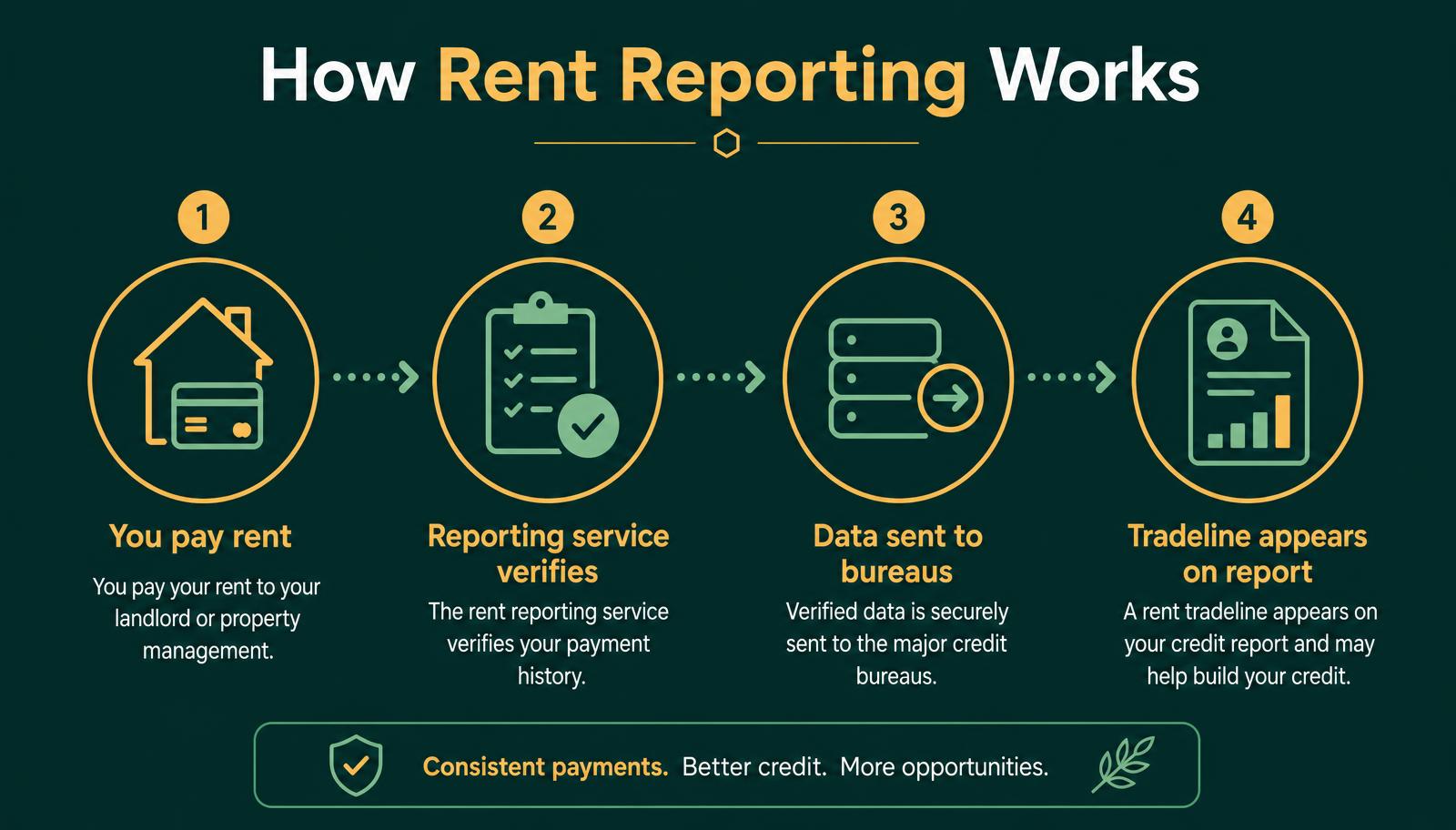
- You pay rent as usual — to your landlord or through a property-management platform.
- A reporting service verifies the payment, either by processing the payment itself, by connecting to your bank account, or by confirming with your landlord.
- Verified data is furnished to the bureaus in the standard industry format.
- A rent tradeline appears on your report, usually within one to two reporting cycles.
There are two routes in:
- Renter-initiated services. You sign up directly and pay a monthly fee, often between $5 and $10, sometimes with a one-time setup charge. Your landlord may need to confirm the lease.
- Landlord- or platform-initiated reporting. Increasingly common with larger property managers and rent-payment apps, and often free to the renter. Ask your leasing office before paying for a third-party service — you may already have access.
Which Bureaus Accept Rent Data
This is the detail that decides whether rent reporting is worth your money.
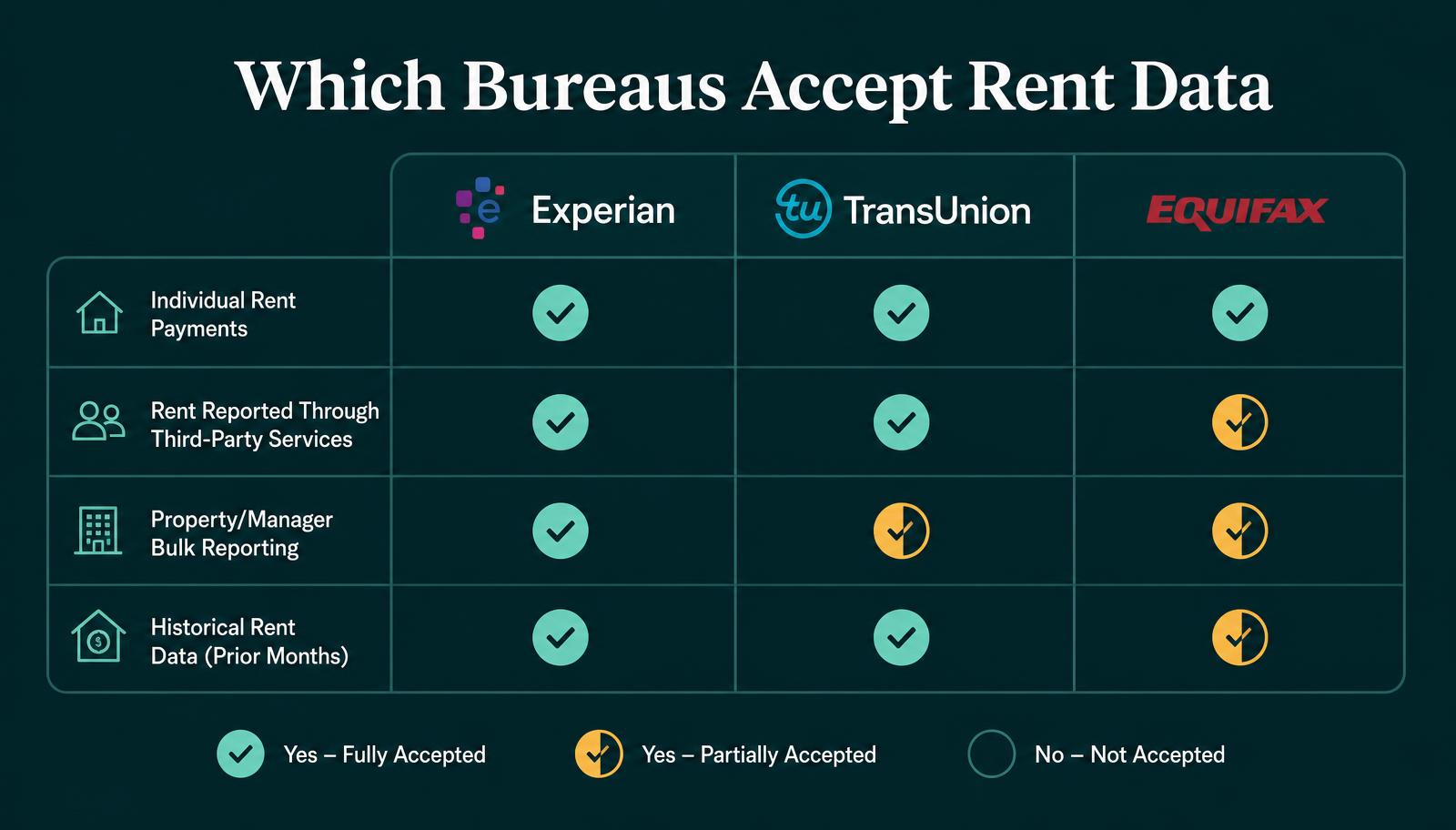
Coverage is uneven. A service that reports to only one bureau leaves two of your three reports unchanged — and a lender who pulls the wrong one sees nothing. Before you enroll, confirm in writing:
- Which bureaus the service furnishes to
- Whether historical rent can be added, and how many months
- The monthly cost and whether it drops if you cancel
- What happens to the tradeline if you stop the service — some remove the history entirely
- Whether late payments are reported as well as on-time ones
Scoring models also differ. VantageScore 4.0 and FICO 9 and 10T are more receptive to alternative data such as rent than older models. Many mortgage lenders still pull older FICO versions, so rent data may help less in a mortgage pull than in a card or auto application — though manual underwriting programs increasingly consider documented rent history directly.
Who Benefits Most
Big gains:
- Credit invisibles — no file at all. A rent tradeline can be the account that makes you scoreable in the first place.
- Thin files — one or two accounts. Adding a large, long-running tradeline meaningfully changes the profile.
- Rebuilders — recent damage, few positives. Rent adds a clean, consistent payment record fast. If you are rebuilding after a discharge, pair it with the plan in our guide to rebuilding credit after bankruptcy.
Smaller gains:
- Thick, established files — ten years of accounts and a 740 score. One more on-time tradeline moves little.
- Anyone with active derogatories. A rent tradeline does not offset a collection. Deal with the negative first using our guide to removing collections.
The Backdating Advantage
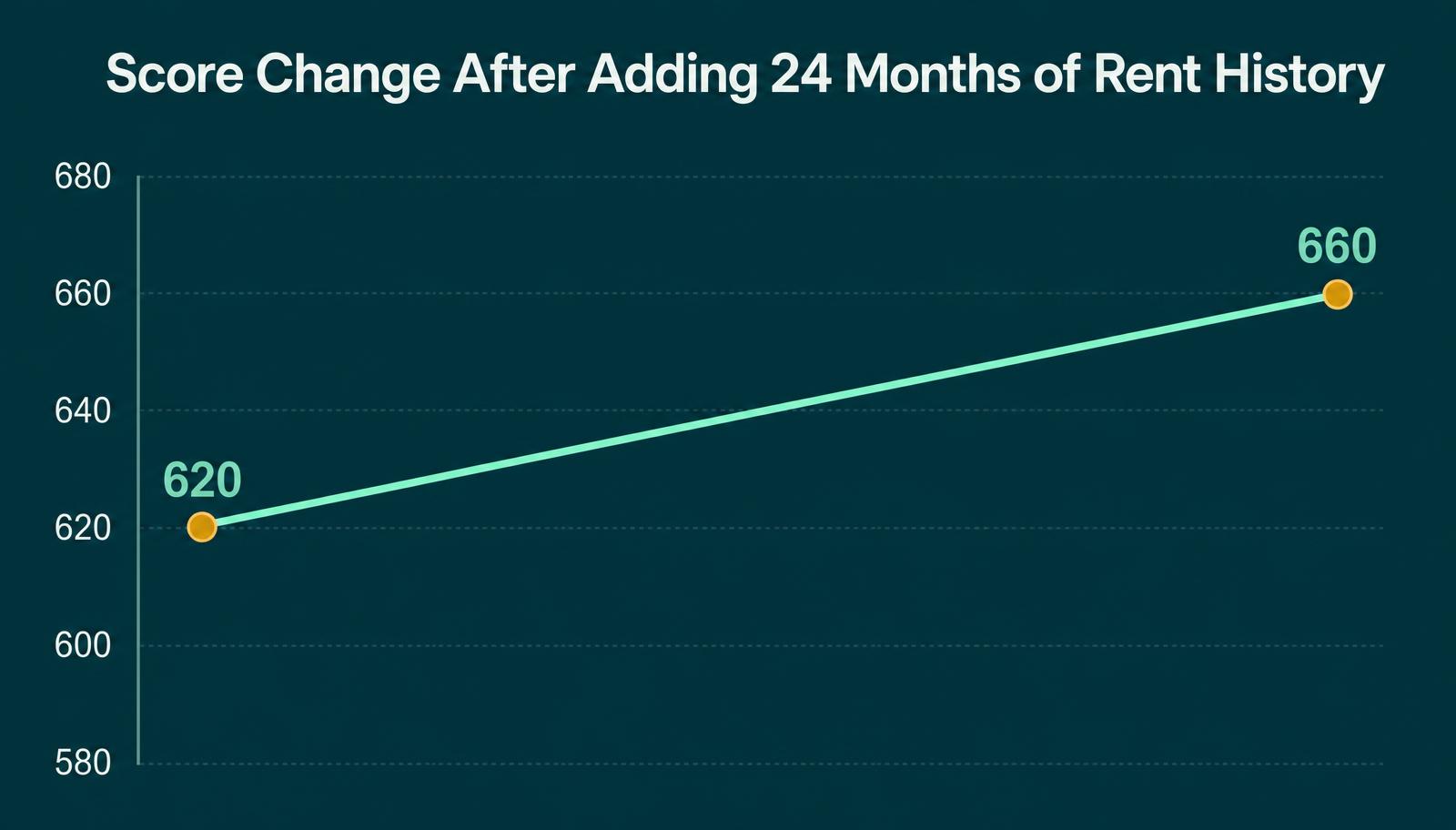
The feature most people overlook: several services can add up to 24 months of past rent at enrollment, provided the payments can be verified through bank records.
That is the difference between waiting two years for history to accumulate and having two years of history appear at once. Because length of credit history is roughly 15% of a FICO score and payment history is 35%, a verified two-year backfill is the single most valuable thing a rent reporting service can sell you. Ask about it specifically; it is often an add-on fee rather than a default.
Honest Limitations
Rent reporting is useful, not magic.
- It is not a substitute for revolving credit. Credit mix matters, and models want to see how you handle a revolving line. Pair rent reporting with a secured credit card for a stronger profile.
- Cancellation can erase your history. Some services remove the tradeline when you stop paying them. Confirm the policy before enrolling.
- Late rent cuts both ways. Once the tradeline exists, a missed month can be furnished like any other delinquency.
- Coverage gaps persist. If your service reports to one bureau and your lender pulls another, the effort is invisible in that application.
- Fees add up. At $10 a month, that is $120 a year. If your file is already thick, the same $120 is better spent on principal.
A Practical Rollout Plan
- Ask your landlord or property platform whether reporting is already available. Free beats paid.
- Check your baseline. Pull all three reports at AnnualCreditReport.com and note the current state of each file.
- Pick a service that covers all three bureaus and offers historical backfill.
- Enrol and request the backfill with bank statements ready as proof.
- Verify the tradeline appears on each report within 60 days. Dispute inaccuracies immediately.
- Automate the rent payment so the record stays perfect.
- Layer other positives — utilization discipline from our credit utilization guide, and the sequencing in our fast-track score guide.
The Wider Trend
Rent reporting sits inside a broader shift toward alternative data in credit decisioning: utility payments, telecom bills, cash-flow underwriting, and now buy now, pay later plans appearing on credit reports. Regulators and consumer advocates have generally supported the direction, on the logic that it expands access to people whose reliability is real but undocumented.
The Consumer Financial Protection Bureau publishes ongoing research on credit invisibility, and the FTC maintains guidance on your rights when any furnisher reports data about you. Both are worth bookmarking before you enroll anywhere.
Quick Summary
- Rent is invisible to bureaus unless someone furnishes the data.
- Reporting turns an existing payment into a positive tradeline.
- Thin and no-file consumers benefit most; thick files see little change.
- Confirm bureau coverage, backfill options, cancellation policy and late-payment handling before paying.
- Only enroll if your rent is consistently on time.
Conclusion and Outlook
Expect rent reporting to keep normalizing. As more property platforms build furnishing directly into their payment flow, the fee-based middle layer will likely shrink and coverage will widen. For now, the opportunity is straightforward: you are already making the payment, and with one setup step, it can start counting.
Check with your landlord this week. If reporting is available for free, there is no reason to wait.
Want a full rebuilding roadmap that puts rent reporting in the right order? The Honest Credit Rebuild Blueprint lays out the complete sequence — currently 40% off.