Your credit report is the story lenders read before deciding whether to trust you — and whether to give you a good rate. The problem? That story is often wrong. Research over the years has repeatedly found that a significant share of credit reports contain errors, and some of those errors are serious enough to get you denied. Learning how to fix errors on your credit report is one of the fastest, cheapest ways to boost your score, and you can do all of it yourself for free.
Why Credit Report Errors Matter Right Now
Lenders, landlords, and insurers make decisions based on data that you did not create and may never have reviewed. A single mistake — a payment marked late that was on time, a debt that isn't yours, a balance that was already paid — can drop your score by dozens of points. In a high-rate environment, that can mean a denied application or thousands of dollars in extra interest.
The encouraging part: because errors artificially suppress your score, correcting them can produce fast, sometimes dramatic gains. This is often the highest-return hour you can spend on your finances.
Background: What's Actually in Your Credit Report
Your credit report is compiled by three major bureaus — Equifax, Experian, and TransUnion — and includes:
- Personal information: name, addresses, Social Security number, employers.
- Account (tradeline) history: credit cards, loans, limits, balances, and payment history.
- Public records: bankruptcies and some judgments.
- Inquiries: who has requested your report and when.
Each bureau may hold slightly different data, which is why an error can appear on one report but not another. That's also why you should check all three.
The most common credit report errors
- Accounts that don't belong to you (often from a mix-up or identity theft).
- Payments reported late that were actually on time.
- The same debt listed twice (duplicate collections).
- Incorrect balances or credit limits (which distort your utilization).
- Closed accounts reported as open, or vice versa.
- Debts discharged in bankruptcy still showing a balance.
Step-by-Step: How to Find and Fix Credit Report Errors
Step 1: Get all three reports for free
Go to AnnualCreditReport.com — the only federally authorized free source — and pull your reports from all three bureaus. Weekly free access is currently available, so there's no reason to pay.
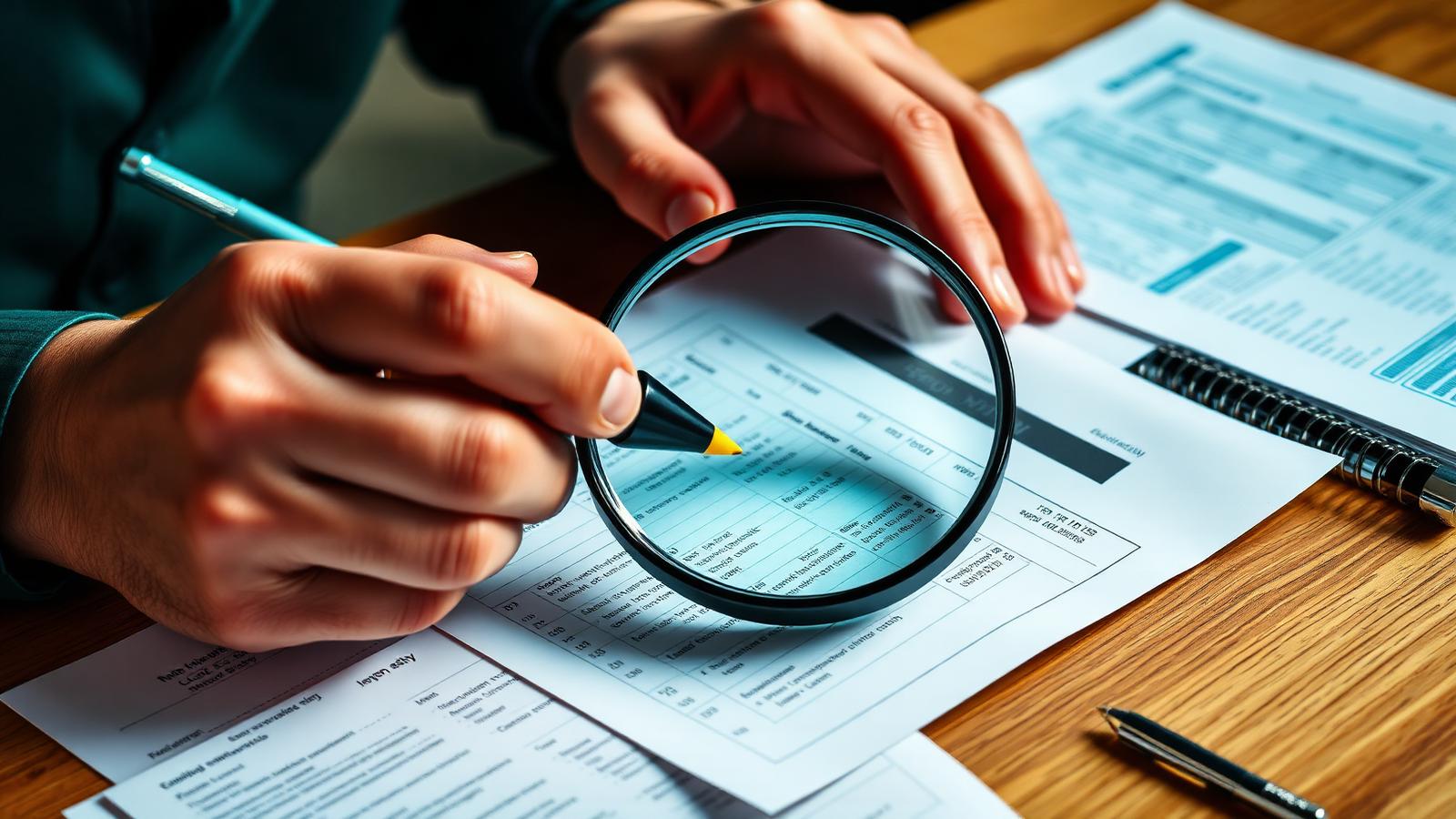
Step 2: Read each report line by line
Go slowly. Check your personal details first, then every account. For each tradeline, verify the balance, credit limit, account status, and payment history. Flag anything you don't recognize or that looks wrong. If reading a report feels overwhelming, our Credit Reports & Scores hub breaks down each section in plain English.

Step 3: Gather your evidence
Before disputing, collect proof: bank statements, payment confirmations, letters, or account records that show the correct information. A dispute backed by documentation is far more likely to succeed.
Step 4: File your dispute
You can dispute directly with each bureau online, by mail, or by phone. Mailing a written dispute (certified, with copies of your evidence) creates a paper trail and is often the most effective route. In your letter, clearly state:
- Your full name and account details.
- Exactly which item is wrong and why.
- What the correct information should be.
- That you are requesting an investigation and correction.
Tip: Dispute the same error with each bureau that shows it. Fixing it at one bureau doesn't automatically fix it at the others.
Step 5: Wait for the investigation
By law, bureaus generally must investigate within 30 days (sometimes 45). They'll contact the company that reported the information, review your evidence, and send you the results in writing. If the item can't be verified, it must be corrected or removed.
Step 6: Escalate if needed
If your dispute is rejected but you're confident you're right:
- Send additional documentation and dispute again.
- File a complaint with the Consumer Financial Protection Bureau.
- Add a brief consumer statement to your report explaining the dispute.
Persistence, backed by documentation, wins most legitimate disputes.

Free Credit Dispute Letter Template
Use this as a starting point when disputing by mail:
[Your Name] [Your Address] [Date]
[Credit Bureau Name and Address]
Re: Dispute of inaccurate information — [Account name and number]
I am writing to dispute the following information in my file. The item listed below is inaccurate: [describe the item and explain why it is wrong]. I have enclosed copies of [list your supporting documents] that support my position.
Under the Fair Credit Reporting Act, I request that you investigate this matter and correct or delete the disputed item. Please send me written confirmation of the results.
Sincerely, [Your Name]
Key Facts and Data
- Multiple studies over the past decade have found errors on a meaningful share of credit reports, some serious enough to affect approvals.
- Disputes are free and protected under the Fair Credit Reporting Act.
- Correcting a balance error directly improves your credit utilization, one of the fastest-moving score factors.
- Filing a dispute never lowers your score.
Real-World Impact
Fixing errors isn't just about a higher number. A corrected report can be the difference between a mortgage approval and a denial, a low auto-loan rate and a punishing one, or a waived security deposit and a hefty one. For victims of identity theft, disputing fraudulent accounts is also a critical step toward reclaiming your financial identity.
Common Mistakes to Avoid
- Checking only one bureau. Errors often live on just one report.
- Disputing without evidence. Documentation dramatically improves your odds.
- Paying a credit repair company for work you can do yourself for free.
- Giving up after one rejection instead of escalating with more proof.
- Ignoring small errors that quietly distort your utilization.
Quick Summary
Pull all three reports, read them carefully, document every error, and dispute each one with the relevant bureau. Wait out the 30-day investigation, escalate if needed, and watch your score recover as inaccurate negatives disappear. It costs nothing but your attention — and it's one of the best returns in personal finance.
Conclusion and Future Outlook
As more of life runs on automated credit decisions, an accurate report matters more than ever. Make checking your reports a habit — at least once a year, ideally more. Combine clean reports with the positive-account strategies in our guide to rebuilding credit after bankruptcy and the right secured credit card, and you'll have a complete system for a stronger score.
Your move: pull your free reports today and flag anything that looks off. Then share this guide with someone who's never checked theirs — and leave a comment with your biggest question about disputes.
Authoritative sources: the Consumer Financial Protection Bureau and the Federal Trade Commission publish free, official guidance on disputing errors and your rights under the Fair Credit Reporting Act.