
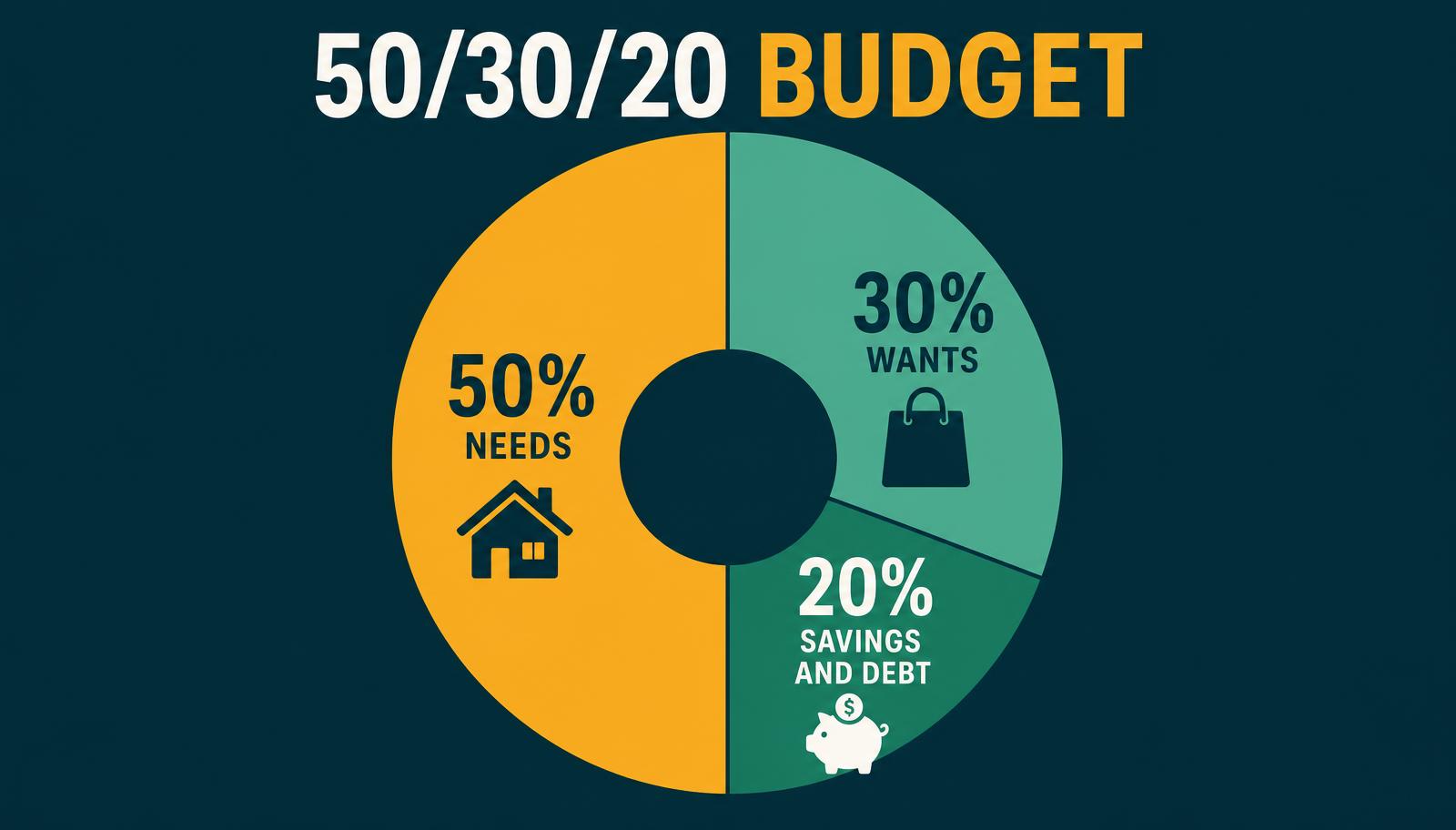
The 50/30/20 budget has survived for two decades because it is simple enough to remember: half of your take-home pay for needs, three-tenths for wants, one-fifth for savings and debt. No spreadsheets with forty categories, no envelope system, no app subscription.
Then you look at the rent. For a large share of households in 2026, housing alone consumes 35–45% of take-home pay, and the classic split collapses before groceries are even entered. That does not make the rule useless — it makes it a target rather than a description.
Why This Matters Right Now
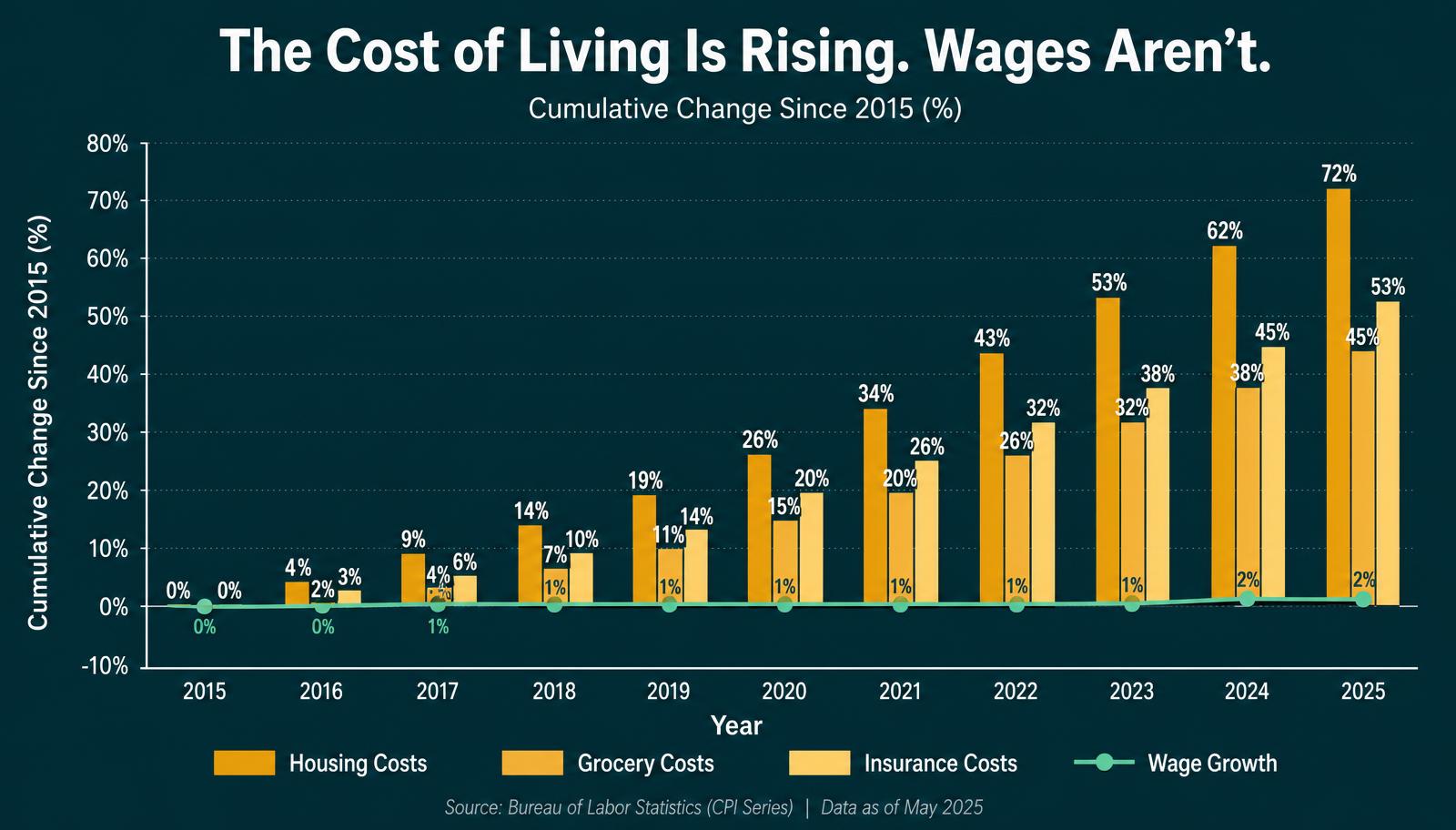
The cost side of the household ledger has moved far faster than the income side. Housing, insurance and grocery prices have compounded for years, while wage growth has been comparatively flat. The result is a squeeze that budgeting advice written in a cheaper decade does not acknowledge.
That squeeze has credit consequences. When needs exceed income, the gap gets financed — on credit cards, on buy now, pay later plans, and eventually on missed payments that become collections. A budget is not just a money exercise; it is the upstream defence for your credit score.
Background: What Goes in Each Bucket
Needs (target 50%) — the things with consequences attached:
- Rent or mortgage, property taxes, and required insurance
- Utilities, including internet if you work from home
- Basic groceries
- Transport to work: car payment, fuel, insurance, transit passes
- Health insurance and prescriptions
- Minimum payments on every debt
Wants (target 30%) — everything discretionary:
- Dining out, delivery, coffee
- Streaming, gaming, subscriptions
- Travel, hobbies, gym memberships
- The premium version of a necessary thing
Savings and debt payoff (target 20%):
- Emergency fund contributions
- Retirement savings beyond an employer match
- Anything paid above the minimum on debt
The last bucket is where the credit progress lives. Minimums keep you current; the extra is what actually shrinks the balance and your utilization ratio.
Key Facts and Data
- The rule uses take-home pay — after tax, after payroll deductions. Using gross income inflates every bucket and guarantees failure.
- Housing is widely considered burdensome above 30% of income; tens of millions of households now exceed that threshold.
- A large share of adults report they could not cover a $1,000 emergency from savings, which is precisely the gap the 20% bucket is meant to close.
- Minimum payments on credit card debt at typical APRs can stretch payoff past 15 years, with total interest exceeding the original balance.
- Automated savings transfers substantially increase the odds that money is actually saved, because the decision is made once instead of monthly.
Step 1: Find Your Real Starting Ratio
Before adjusting anything, measure. Pull the last three months of bank and card statements and sort every transaction into the three buckets. Three months smooths out the anomalies.
Most people discover one of three patterns:
- Needs are 60–70%. Housing or transport is the culprit. Structural change is required — a cheaper lease, a housemate, a lower-cost car — and no amount of skipped coffee closes a gap that size.
- Wants are 40%+. This is the easiest version to fix, and usually the most uncomfortable to admit.
- Savings is 0%. Extremely common, and the single most important number to move off zero, even at 2%.

Step 2: Adapt the Ratios Honestly
If 50/30/20 is out of reach this month, use a transitional split rather than giving up:
- 60/30/10 — housing-squeezed households. Savings still exist, just smaller.
- 70/20/10 — crisis mode. Protect the 10% anyway; a zero-savings budget guarantees the next emergency becomes debt.
- 50/20/30 — aggressive payoff mode, for anyone carrying high-interest balances. Cutting wants to 20% and pushing 30% at the debt shortens payoff dramatically.
The direction matters more than the destination. Moving needs from 68% to 64% over a quarter is real progress, even though neither number is 50.
Step 3: Attack the Big Three Before the Small Stuff
Budget advice loves small cuts because they are easy to write about. The money is elsewhere.
- Housing. The largest line, and the hardest to change — but a housemate, a move, or a renegotiated lease renewal moves more money than every subscription combined. If you rent, make the payment work for you through rent reporting.
- Transport. A car payment plus insurance plus fuel routinely reaches 20% of take-home pay. Refinancing, downsizing, or dropping to one vehicle is a structural win.
- Insurance. Shopping auto and home policies annually is unglamorous and frequently saves hundreds a year for an hour of effort.
Then, and only then, the smaller categories: subscriptions you forgot, delivery fees, brand-name groceries.
Step 4: Automate the 20% on Payday
A budget that depends on willpower at the end of the month will not survive. Set up automatic transfers timed to payday:
- A fixed amount to a separate high-yield savings account you do not carry a card for.
- A fixed extra payment to your highest-APR debt, scheduled the day after payday.
- Autopay on every minimum, so a busy month can never cost you a late mark.
Payment history is roughly 35% of a FICO score, which makes autopay on minimums the highest-return automation in personal finance.

Step 5: Order the Savings Correctly
- $1,000 starter fund. Small, fast, and it stops the next flat tyre from becoming a credit card balance.
- Employer retirement match, if offered. It is an immediate return you cannot beat elsewhere.
- High-interest debt. Anything above roughly 8% beats almost any guaranteed return on savings. Attack it with the balance transfer strategy or the avalanche method.
- Three to six months of expenses. The real emergency fund, built once the expensive debt is gone.
- Long-term investing.
Real-World Impact
A working budget changes credit outcomes more reliably than any credit tactic. Households with a cash buffer do not miss payments during a bad month, and missed payments are what create the charge-offs and collections that take seven years to age off.
There is a compounding effect in the other direction too. A better score lowers insurance quotes in most states, reduces deposits, and cuts the interest on the very debt the budget is trying to clear — which frees up more room in the 20% bucket.
For free, unbiased tools, the Consumer Financial Protection Bureau's budgeting resources and the Federal Trade Commission's guide to making a budget are both worth an hour of your time.
Key Takeaways
- 50/30/20 is a target, not a verdict — measure your real ratio before judging it.
- Housing and transport are where the money is; small cuts cannot close a structural gap.
- Use a transitional split like 60/30/10 rather than abandoning savings entirely.
- Automate the savings and the minimums on payday.
- Build a $1,000 buffer, then attack high-interest debt, then build the full fund.
Conclusion and Outlook
Prices are unlikely to retreat to where the rule was invented, so the honest version of 50/30/20 in 2026 is a direction of travel: shrink needs where structurally possible, hold wants in check, and defend the savings line even when it is small.
Do that for six months and the effect shows up twice — in the balance of your accounts and in the trajectory of your credit score. Start with our fast-track score guide to pair the budget with the credit side.
Want the full system? The Honest Credit Rebuild Blueprint pairs this budget with a 12-month credit rebuilding plan — currently 40% off.