
A collection notice is designed to make you act quickly and emotionally. A debt validation letter is the legal instrument that slows the whole thing down and shifts the burden back where it belongs: onto the collector, to prove the debt is real, is yours, and is theirs to collect.
It is free. It takes twenty minutes. And in a market where old debts change hands for pennies and arrive with fragmentary paperwork, it works more often than most people would guess.
Why This Matters Right Now
Debt buyers have been unusually active as delinquency rates on cards and auto loans have climbed. Portfolios of charged-off accounts get sold, resold, and repackaged, and documentation degrades at every hop. By the third owner, the "account" may be a spreadsheet row with a name, a balance, and no underlying agreement.
Meanwhile, credit reporting rules have tightened. Paid medical collections under $500 no longer appear at all, and the reporting delay on medical debt has lengthened — changes we covered in our guide to medical debt and your credit report. Collectors know consumers are more informed than they were five years ago, and a well-drafted validation request lands differently now than it once did.
Background: Where the Right Comes From
The Fair Debt Collection Practices Act governs third-party collectors — the agencies and debt buyers who contact you about someone else's original loan. It does not generally cover the original creditor collecting its own debt.
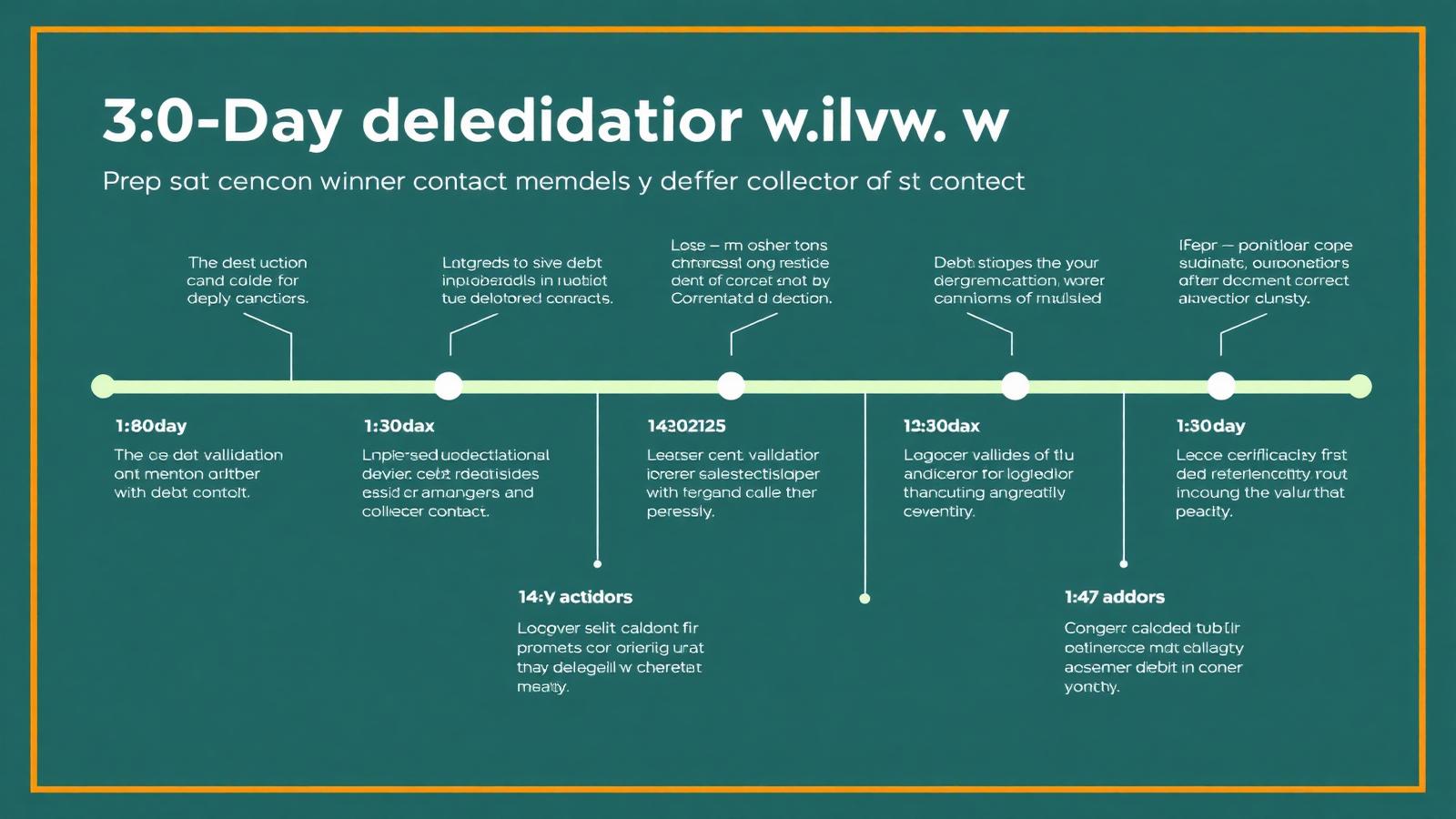
Under the Act, within five days of first contacting you, a collector must send a written validation notice stating the amount, the original creditor, and your right to dispute. From the date of that first communication, you have 30 days to send a written dispute or request for verification.
If you do, the collector must cease collection activity until it mails you verification. That pause is the leverage. It is not a loophole; it is the statute working as designed.
Validation vs. Dispute: Two Different Tools
People conflate these constantly.
- Validation is directed at the collector, under the FDCPA, about whether the debt is legitimate and collectible.
- A dispute is directed at the credit bureaus, under the Fair Credit Reporting Act, about whether the information on your report is accurate.
You often need both. Our step-by-step guide to fixing errors on your credit report covers the bureau side; this article covers the collector side.
The Latest Developments
Three shifts are worth knowing in 2026:
- Documentation standards for lawsuits have hardened. Courts in several states now expect debt buyers to produce the chain of assignment and account-level records before entering judgment. Collectors who cannot validate to you often cannot prove the case in court either.
- Electronic communication rules are settled. Collectors may contact you by email and text within defined limits, and those communications count as contact — which means they also start your 30-day clock.
- Reporting behaviour has changed. Many large agencies now decline to report smaller balances to the bureaus at all, preferring phone and letter pressure. The absence of a credit report entry does not mean the debt is gone.
Key Facts and Numbers
- 30 days from first contact is your window to trigger the mandatory pause.
- 7 years from the date of first delinquency is how long a collection can appear on your report, regardless of who owns it.
- Statutes of limitation on written contracts range from roughly 3 to 10 years depending on the state — this is a separate clock from credit reporting.
- Charged-off portfolios frequently sell for a few cents on the dollar, which is precisely why documentation is thin.
How to Send a Debt Validation Letter: Step by Step
1. Do not talk to them first
Before you send anything, stop taking the calls. Anything you say can be recorded and used to establish that you acknowledged the debt. Write down the date of first contact, the agency name, and the reference number from the notice. That is all you need.
2. Check the calendar
Find the date of the collector's first communication. If you are inside 30 days, say so explicitly in the letter — it invokes the mandatory pause. If you are outside 30 days, send it anyway, but expect no automatic stop in collection.
3. Write the letter
Keep it short, factual, and unemotional. Include:
- Your name and address, and the collector's reference number
- A clear statement that you dispute the debt and request validation under the FDCPA
- A request for the amount owed, the original creditor's name, and verification the debt is yours
- A request for the date of first delinquency, which controls the seven-year reporting window
- A request that all further communication be in writing
Do not admit the debt is yours. Do not offer to pay. Do not propose a settlement in the same letter.
4. Send it correctly
Certified mail with return receipt. Keep a copy of the letter, the certified mail receipt, and the green card when it comes back. If the matter ever reaches a court or a regulator, that paper trail is your case.

5. Log everything after that
Every call, every letter, every date. If a collector continues to call after receiving a timely validation request, that is a potential FDCPA violation, and the log is what makes it provable.
6. Handle the response
There are three realistic outcomes.
- They validate properly. The debt is real. Now you decide: pay in full, negotiate a settlement, or wait. Read our collections removal guide before you pay anything.
- They respond with something inadequate — a printed screen with your name and a number, no original creditor, no dates. Reply in writing identifying what is missing, and dispute the entry with the bureaus in parallel.
- They go quiet. This happens more than people expect. Silence is not legal cancellation of the debt, but a collector that cannot validate generally cannot report it accurately either. Dispute the tradeline with each bureau and cite the unanswered validation request.
The Statute of Limitations Trap
This is the part that costs people the most money.
Every state sets a time limit after which a creditor can no longer sue you to collect. Once that period expires, the debt is often called "time-barred." It still exists, it may still appear on your report until the seven-year mark, but the courthouse door is closed.
Here is the trap: in many states, making a payment or acknowledging the debt in writing can restart the clock. A $20 goodwill payment on a six-year-old debt can revive a lawsuit that was no longer possible the day before.
So before you pay anything on an old account:
- Find the date of first delinquency, not the date the collector bought it.
- Check your own state's limitation period for that debt type.
- If it is time-barred, understand that any payment may reset it.
The Federal Trade Commission's guidance on debts and time limits is a reliable plain-language reference.

Real-World Impact
Consider a $1,900 charged-off card, originally opened in 2019, defaulted in 2021, and now held by its third buyer. The consumer receives a call, panics, and sets up a $75 monthly plan. They have just acknowledged the debt, potentially restarted the limitation clock in their state, and the collection entry remains on their report until 2028 regardless.
The alternative path costs one certified letter. If the buyer produces the original agreement and statements, the consumer negotiates from an informed position. If it cannot, the consumer disputes the tradeline and often watches it disappear.
Same debt. Very different outcomes — and the difference is a 20-minute letter sent inside a 30-day window.
Expert Perspective
Consumer attorneys tend to make the same three points: never negotiate before validating, never pay by phone in the first call, and never assume a collector's number is correct. Balances routinely include fees and interest the original contract did not authorise.
Credit counsellors add a fourth: validation is not a magic eraser. It is a filter. It separates the debts you genuinely owe — which you should plan to resolve — from the ones nobody can prove you owe, which you should not pay out of anxiety.
Key Takeaways
- You have 30 days from a collector's first contact to demand written validation, and they must pause collection while it is pending.
- Validation targets the collector; a bureau dispute targets your credit report. Use both.
- Never acknowledge or pay an old debt before checking your state's statute of limitations.
- Send by certified mail, keep every document, and log every contact.
- A collector that cannot validate usually cannot report accurately either — dispute the tradeline.
Conclusion and Outlook
Debt buying is a volume business, and volume businesses cut corners on paperwork. As courts and regulators keep raising the documentation bar, the gap between what collectors claim and what they can prove is widening in the consumer's favour.
Your job is simply to ask, in writing, within the window. Start there, then move to the credit report side with our collections removal playbook and the fast-track score guide.
Want the letter templates and the full sequence? The Honest Credit Rebuild Blueprint includes ready-to-send validation and dispute letters — currently 40% off.